
The Morgue / The Books Nobody Vouched For
The Books Nobody Vouched For
M.R. James spent his days translating gospels the Church declined to stand behind. Then he went home and wrote about scholars who open old manuscripts and regret it.
Two careers, one desk
Montague Rhodes James died in 1936 with two reputations that almost never met.
The first belonged to the scholar. Provost of King's College, Cambridge, then Provost of Eton. Director of the Fitzwilliam Museum. A medievalist who catalogued the manuscript holdings of college after college — Peterhouse, Pembroke, Jesus, Corpus Christi, St John's, Clare, Trinity Hall, Magdalene, King's, Queens', St Catharine's, Christ's, Sidney Sussex — and then Aberdeen, and the Pepys library, and Peterborough Abbey's lost catalogue, and the medieval manuscripts of the Fitzwilliam. Those catalogues are still in print. Scholars still use them. It is an amount of work that reads, laid out end to end, like a clerical error.
The second reputation belonged to the man who wrote Ghost Stories of an Antiquary.
People who know the second one tend to treat the first as background — the day job that furnished the settings. Old libraries, dusty deeds, cathedral closes, a scholar in a bad hotel. That's the usual telling: he wrote what he knew, and what he knew happened to be atmospheric.
It's wrong, and the way it's wrong is interesting.
What he actually spent his life doing
The through-line of James's scholarship is not medieval manuscripts in general. It is a specific and much stranger body of material: the Christian texts that didn't make it.
In 1917 he produced the first English translation of The Biblical Antiquities of Philo — a retelling of Hebrew scripture from Adam to the death of Saul, attributed to Philo of Alexandria and certainly not by him, surviving in Latin, sitting in the margins of the tradition for eighteen centuries. In 1920 he published The Lost Apocrypha of the Old Testament: a book about texts that no longer exist, assembled from the quotations other people made of them before they vanished. Consider what kind of mind takes that on as a project. He was cataloguing an absence.
And in 1924, Oxford published The Apocryphal New Testament, translated by M.R. James. It went into reprint after reprint for sixty years and stood as the standard English collection until J.K. Elliott's revision in 1993 — which is itself built on James's frame and named after his book.
One volume. Everything the early Church wrote about Christ and the apostles and declined to canonise, in English, with the manuscript apparatus, from a man who had personally handled a startling proportion of the surviving copies.
What's actually in it
Here is where most accounts go soft, because most accounts assume the apocrypha are the greatest hits — the Harrowing of Hell, Veronica's veil, the childhood miracles. Those are in there. They are also the least surprising things in the book.
Turn to the Acts of John, and on the night before the arrest Christ does not go quietly to Gethsemane. He tells the apostles to join hands and make a circle around him, and he sings, and they dance, and he answers himself line by line while they respond Amen — I would be saved, and I would save. I would be born, and I would bear. I would eat, and I would be eaten. And then: Whoso danceth not, knoweth not what cometh to pass. Afterward John flees to a cave on the Mount of Olives, and Christ appears to him there while the crucifixion is happening down in the city, and tells him that none of the things they will say of him has he suffered. Same text, elsewhere: his body is sometimes solid and sometimes not, he leaves no footprint, and when John looks at him he is not always the same shape or the same age.
Turn to the Acts of Thomas, and you find the Hymn of the Pearl — a king's son sent down into Egypt to fetch one pearl, who puts on Egyptian clothes and eats Egyptian food and forgets that he is a prince, forgets the errand, forgets his father, and sleeps, until a letter arrives from home and reads itself aloud to wake him.
Turn to the Infancy Gospel of Thomas, and the child Jesus is five years old and a boy bumps him in the street, and Jesus says thou shalt not finish thy course, and the boy falls down dead. The parents come to Joseph. Joseph takes his son aside. The accusers are struck blind.
Turn to the Apocalypse of Peter, and you get the earliest guided tour of hell in Christian literature, sin by sin, punishment fitted to offence — the machinery Dante would run on a thousand years later, already assembled and already running.
None of that is a bedtime story. Most churchgoing people have never encountered any of it. A good number of clergy haven't either. It was in English on a shelf at Oxford from 1924 onward, and it stayed obscure anyway, because obscurity is not the same thing as suppression.
Nobody was burned for this
It's tempting — and I'd have said it myself before checking — to imagine James doing something dangerous. A few centuries earlier, the story goes, this work would have got him killed.
The record says otherwise, and the truth is stranger.
Much of the apocryphal material was not merely tolerated in medieval Christendom, it was everywhere. The Harrowing of Hell — Christ descending after the crucifixion to break the gates and lead out Adam and the righteous dead — is not in any canonical gospel. It comes from the Gospel of Nicodemus, the Descensus Christi ad Inferos, and by the high Middle Ages it was second only to the Crucifixion itself as a subject for religious art. It was painted, carved, glazed into windows, and staged in the street: the York cycle, the Chester cycle, the Cornish plays, all of them give it a scene, with Hell as a besieged city and Satan and Hades arguing about how to hold the gate. Illiterate townspeople watched Christ kick in the door of hell as annual civic theatre.
What actually got men killed was translating the canonical text into English. Tyndale was strangled and burned in 1536 for the New Testament. Wycliffe's bones were exhumed and thrown into a river. The Church could live with a wild story about Christ storming hell precisely because nobody would mistake it for scripture. What it could not live with was a ploughboy reading Matthew for himself and forming an opinion.
So the apocrypha were never the forbidden books. They were something the modern mind finds harder to hold: the unvouched-for ones. Not banned, not guarded, not hunted down. Just quietly not stood behind. No authority anywhere saying this is true, and no authority saying it isn't, and fifteen hundred years of the material circulating anyway in the margins with nobody's name on the guarantee.
Which is a much more unsettling status than banned, if you sit with it. A banned book has been read by someone in charge. Somebody assessed it and made a ruling. The unvouched-for book has simply been left there.
The correspondence of Pontius Pilate
There is one more category in the book, and it is the one that best explains why none of this could be canonised even when everybody enjoyed it.
The apocrypha are full of documents. Not visions, not sayings — paperwork. There is a letter from Pilate to the Emperor Tiberius reporting the execution and its aftermath, in the register of a provincial official covering himself. There is Tiberius's reply. There is a further exchange with Herod. There is a report on what the guards at the tomb said. There is correspondence between Paul and Seneca, thirteen letters of it, in which the apostle and the Stoic philosopher of Nero's court turn out to have been on friendly terms and to have exchanged views about style.
None of it is authentic. All of it was written to look authentic — to have the shape of something filed, stamped, and archived. The Gospel of Nicodemus opens by claiming to be a Hebrew record translated into Greek, and gives a date, and names the officials, because that is what a real record would do.
That instinct — to invent not a story but a source — is the oldest trick in the apocryphal repertoire, and it is exactly the trick M.R. James would later run in fiction. His stories are stuffed with documents: a Latin inscription, a leaf from a psalter, a will with an odd clause, a printed pamphlet, a scrapbook of manuscript fragments bought too cheaply. The horror is never asserted by the narrator. It is attested, in a document, by somebody who is not around to be questioned.
He had spent his professional life determining exactly how much weight a document like that can bear. Then he wrote fiction in which the answer is: more than you would like.
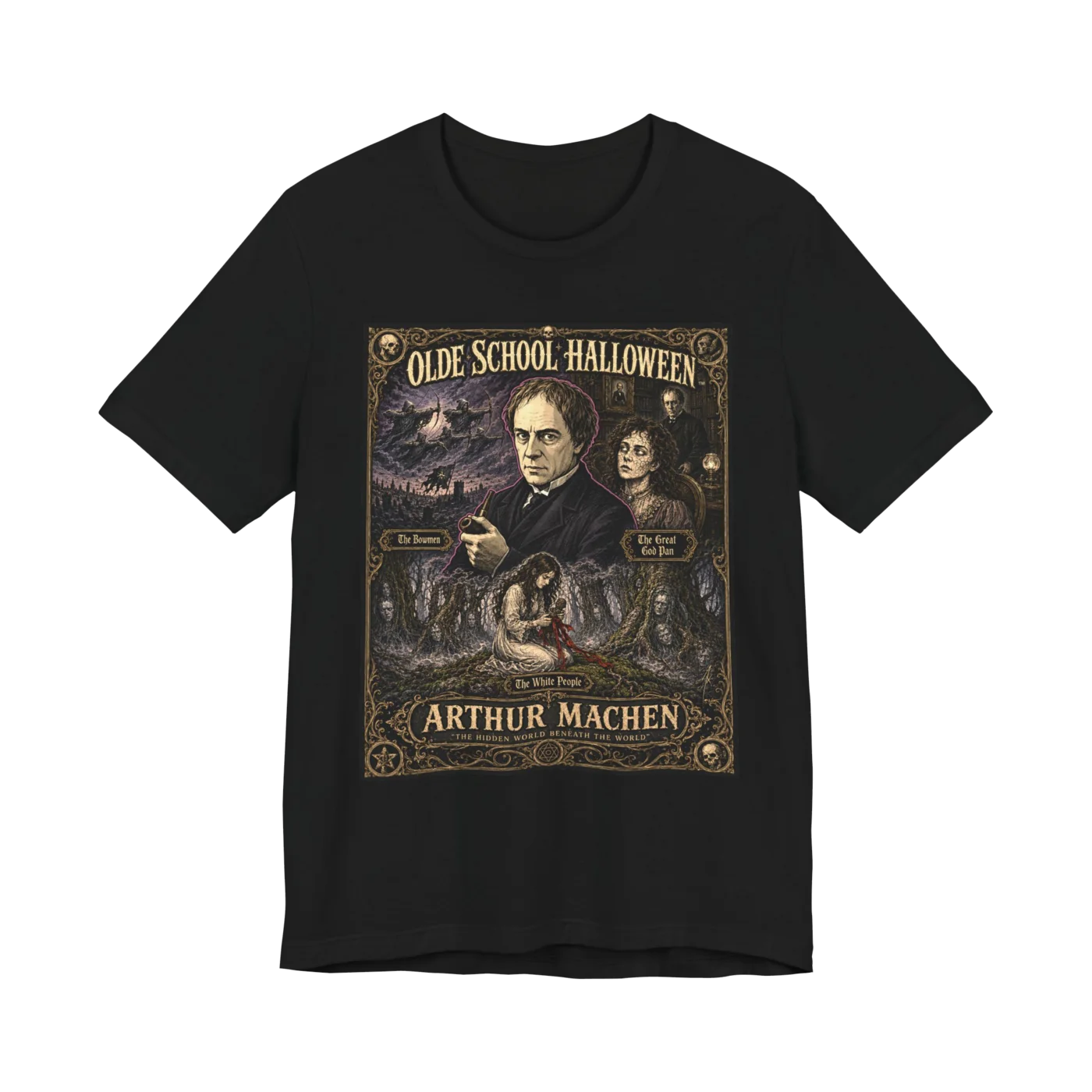
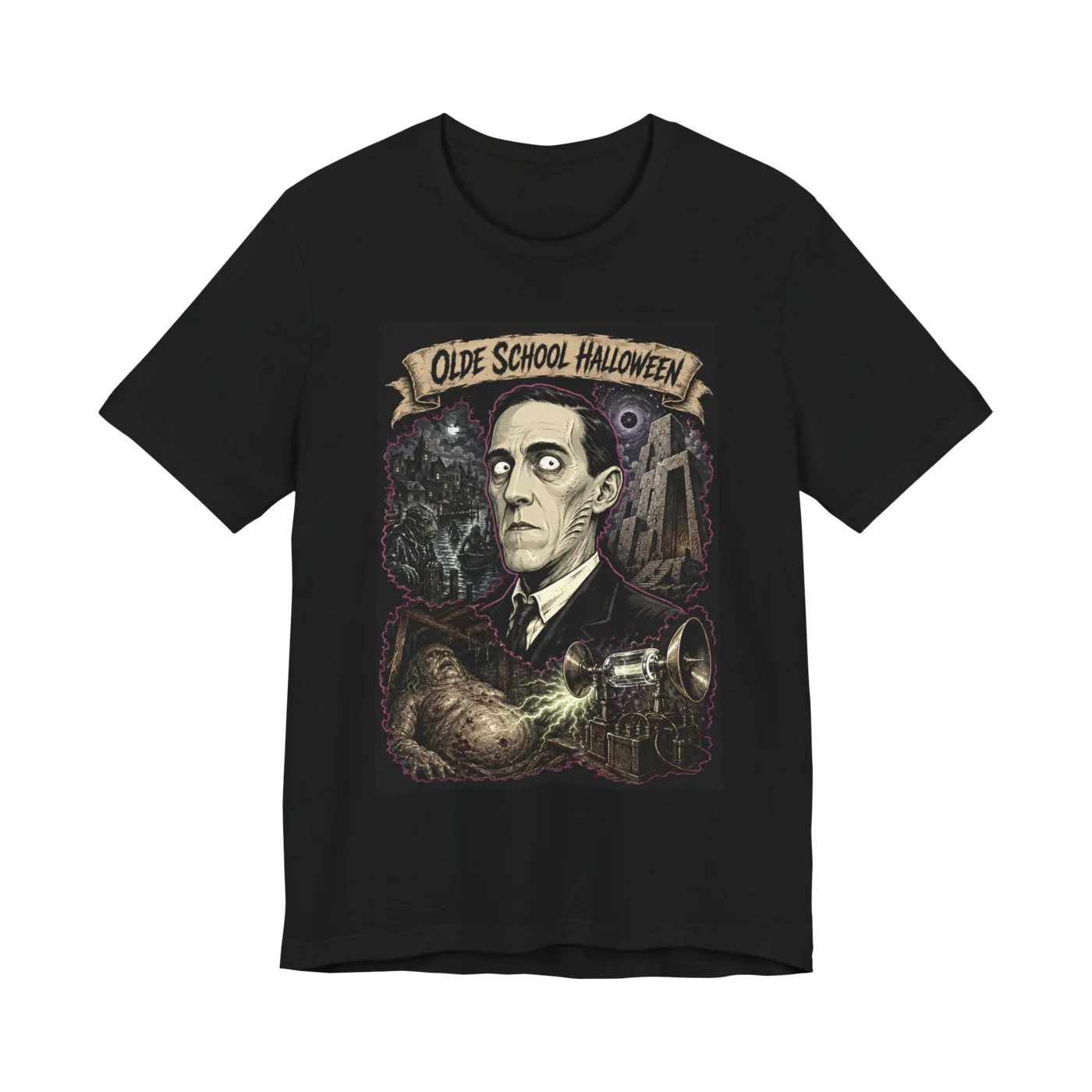
He was not the only one working that seam. Three men on the other side of the Atlantic were inventing gods for each other in the post at roughly the same time, and none of them ever met.
The engine
Now go back to the ghost stories with that in your hand.
The James formula is famously fixed. A scholarly man, mild, unmarried, not especially imaginative, goes looking for a document. He finds it. Something comes with it.
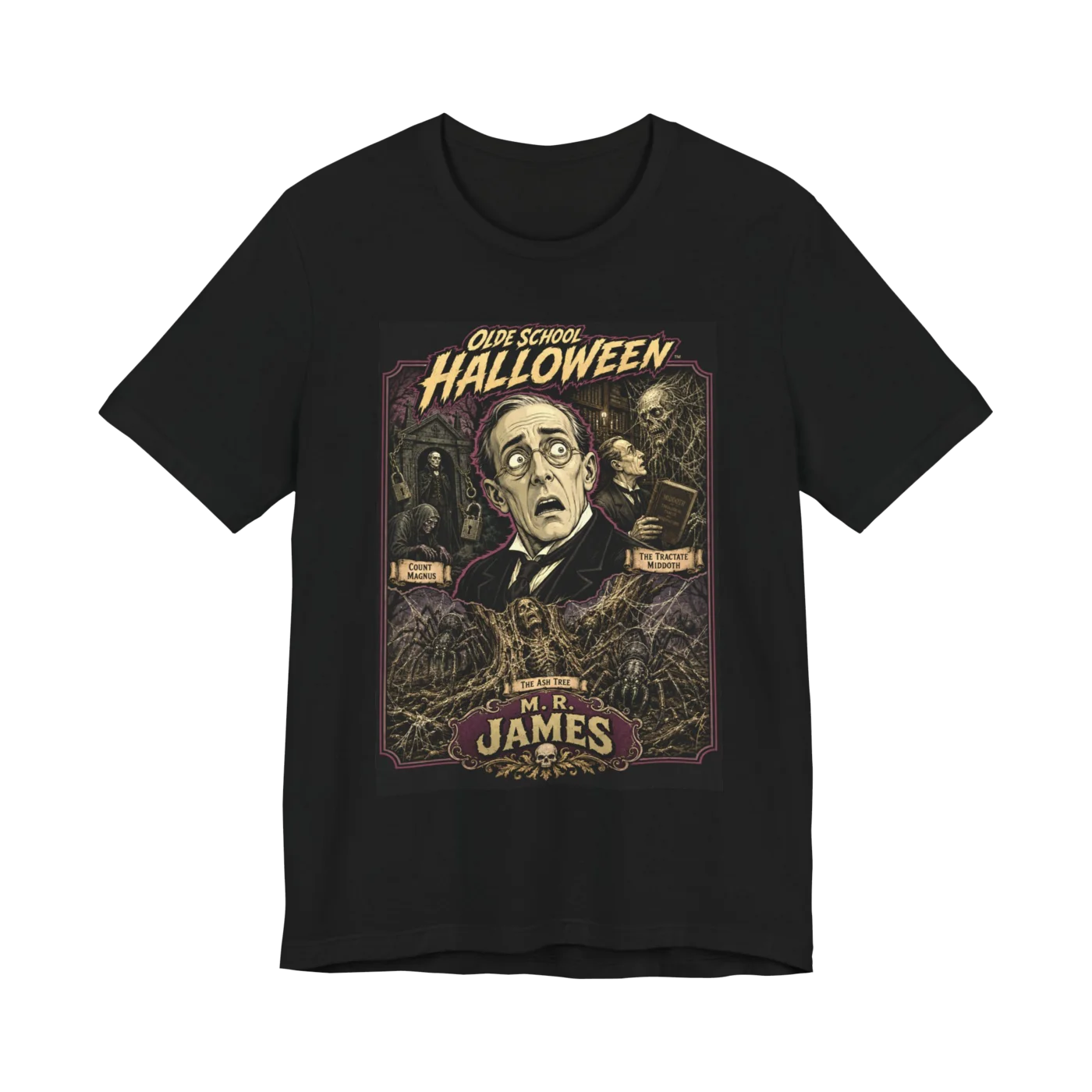
In "Count Magnus," a travel writer poking through a Swedish family's papers reads about the Black Pilgrimage and then stands outside the mausoleum and says aloud, twice, idly, into an empty churchyard, that he would like to see the Count. Three padlocks come off that door over the following days, on their own schedule, one at a time. In "The Tractate Middoth," a man goes into the stacks after a specific volume — a real tractate of the Mishnah, the one on the measurements of the Temple — and someone else is already at the shelf, and has been for a while, and there is dust on him. In "Canon Alberic's Scrap-book," a collector buys an album of manuscript leaves off a terrified sacristan for far too little money, and takes home what was in the album with it.
Every one of those is a man who wanted a text.
Not a man who trespassed, or dug something up, or performed a rite. A man who did the reading — who went into a library after a document that was sitting there unguarded, with nobody's authority attached to it, and took it down off the shelf because he wanted to know.
That is exactly, precisely, and not at all coincidentally what M.R. James did for a living, every day, for fifty years.
He was not inventing the sensation of opening an old text and finding something looking back out of it. He was the man in Europe best positioned to describe it. He had handled the Acts of John. He had translated the boy in the street falling down dead. He had spent 1920 writing a book about apocrypha that no longer exist, reconstructing them from the marks other books left where they used to be — which is, if you turn it slightly, a description of a haunting.
And then, at Christmas, with the candles lit and a few friends in the room at King's, he would read them something short about a scholar who wanted a manuscript.
The last of it
The joke everyone tells about James is that his stories are polite. Nothing chases you. The horror waits to be asked, and it is always asked, and it always says yes.
That politeness is the whole theology of the thing, and it comes straight off his desk. In a James story there is no seal, no ward, no bishop's authority barring the door. The dangerous object is simply available. It is in the library. It has been in the library a long time. Nobody has vouched for it and nobody has forbidden it and nobody is going to stop you.
You just have to want it enough to go down the stacks after it.
Look at the poster and you will find him doing exactly that — the Provost with his eyes gone wide behind the little round glasses, and behind him the mausoleum with the padlocks, and the man holding the tractate, and the thing coming out of the roots of the ash tree with a great many legs. He is not being hunted in that picture.
He is being answered.
Shirts from this one
For anyone who went down the stacks anyway.


The Porchlight
New shirts. Olde stories. First word on every sale.
Twice a month, thereabouts. Unsubscribe whenever.