
The Morgue / The Mask Aisle
The Mask Aisle
Ben Cooper made the costume you wore every Halloween for twenty years, and your mother never once said the name out loud.
The stacks
You knew the aisle by smell before you turned into it. Warm vinyl and printing ink and the particular chemical sweetness of a plastic mask sealed in a box since spring — and the boxes were stacked to the ceiling at Woolworth's and Kresge's and Woolco, each one with a cellophane window and a face looking out of it.
You did not shop. You excavated. The good ones were never on top. The label on the end of the box told you what was inside without having to pull it, and you went through the whole column with your arms out, restacking as you went, while your mother waited.
Almost every one of those boxes came from a company in Brooklyn called Ben Cooper, Inc. There is a very good chance that until this sentence you had no idea.
The most successful invisible brand in the history of the holiday
Here is the strange thing about Ben Cooper, and it is the whole reason this article exists. From the 1950s through the mid-1980s the company was one of the three largest Halloween costume manufacturers in America. It dressed a substantial fraction of an entire country's children for thirty consecutive Octobers. And nobody's mother ever said we're getting you a Ben Cooper.
She said: pick one.
That is not a marketing failure. It is what total saturation actually looks like from the inside. The product was so completely identical with the occasion that the brand behind it dissolved. Nobody says the name of the thing that is simply how the thing is done. The costume was not a Ben Cooper costume. It was a Halloween costume, and there was only one kind.
The man who dressed the Cotton Club
Ben Cooper was born on the Lower East Side of Manhattan in 1906. He studied accounting. He tried, briefly and unsuccessfully, to be a songwriter. In 1927 he went into theatrical costuming instead, and he was good at it — he designed for the Cotton Club in Harlem and for editions of the Ziegfeld Follies.
Then the Depression came and took live theatre with it, and Ben Cooper looked around for something people were still spending money on. Halloween, as it happened, was on the way up.
In 1937 he took control of a firm called A.S. Fishbach, which held something enormously valuable: a licence to make costumes based on Walt Disney characters. The two operations formally merged as Ben Cooper, Inc. in December 1942.
So the arc is this. A man who cut costumes for chorus lines at the Cotton Club spent the second half of his career mass-producing a vinyl bag with a hole in it. He was called the Halston of Halloween in a 1979 magazine profile, and the joke in that is doing more work than whoever wrote it intended.
Nobody ever questioned the format
Consider what you actually wore.
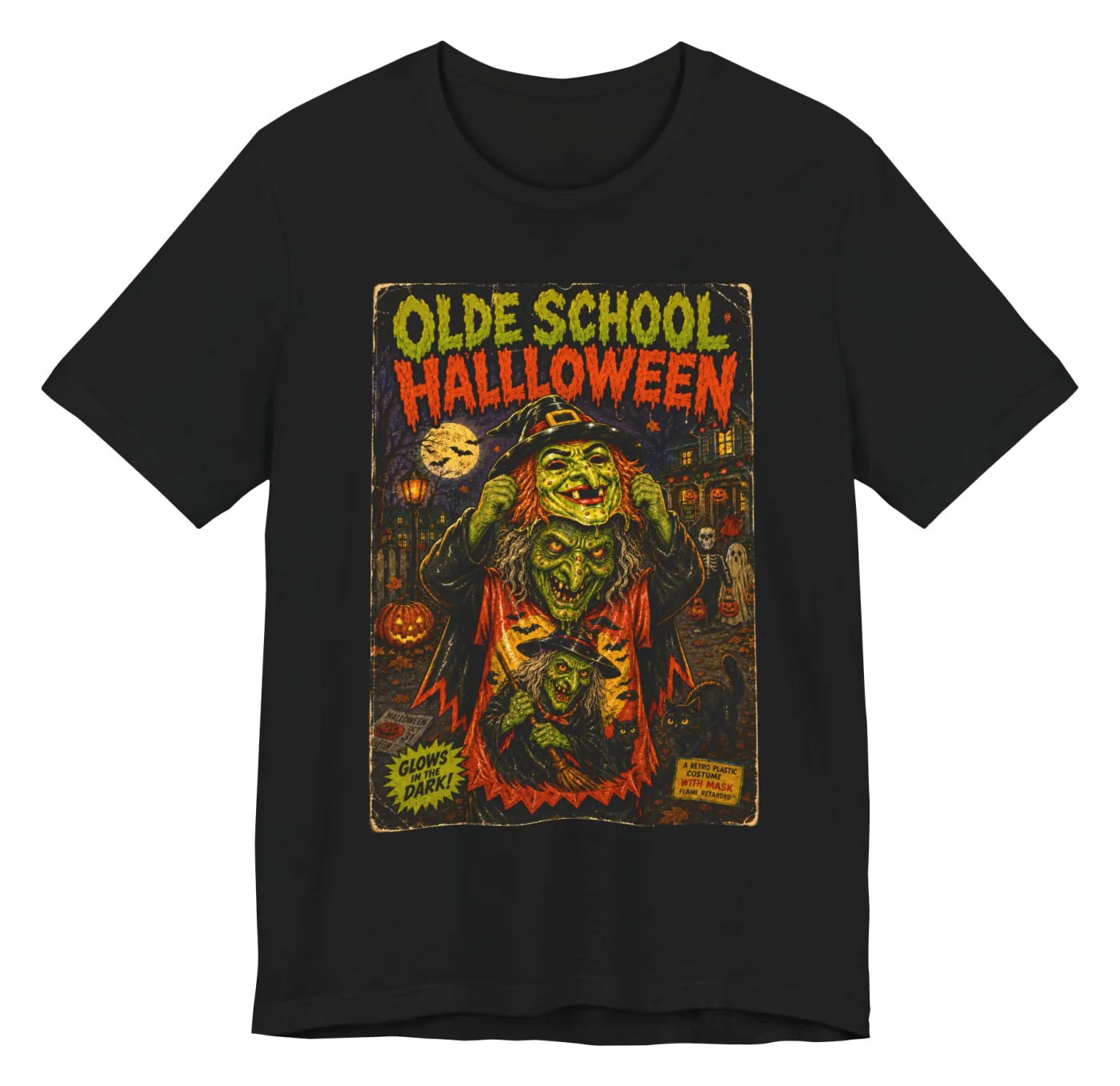
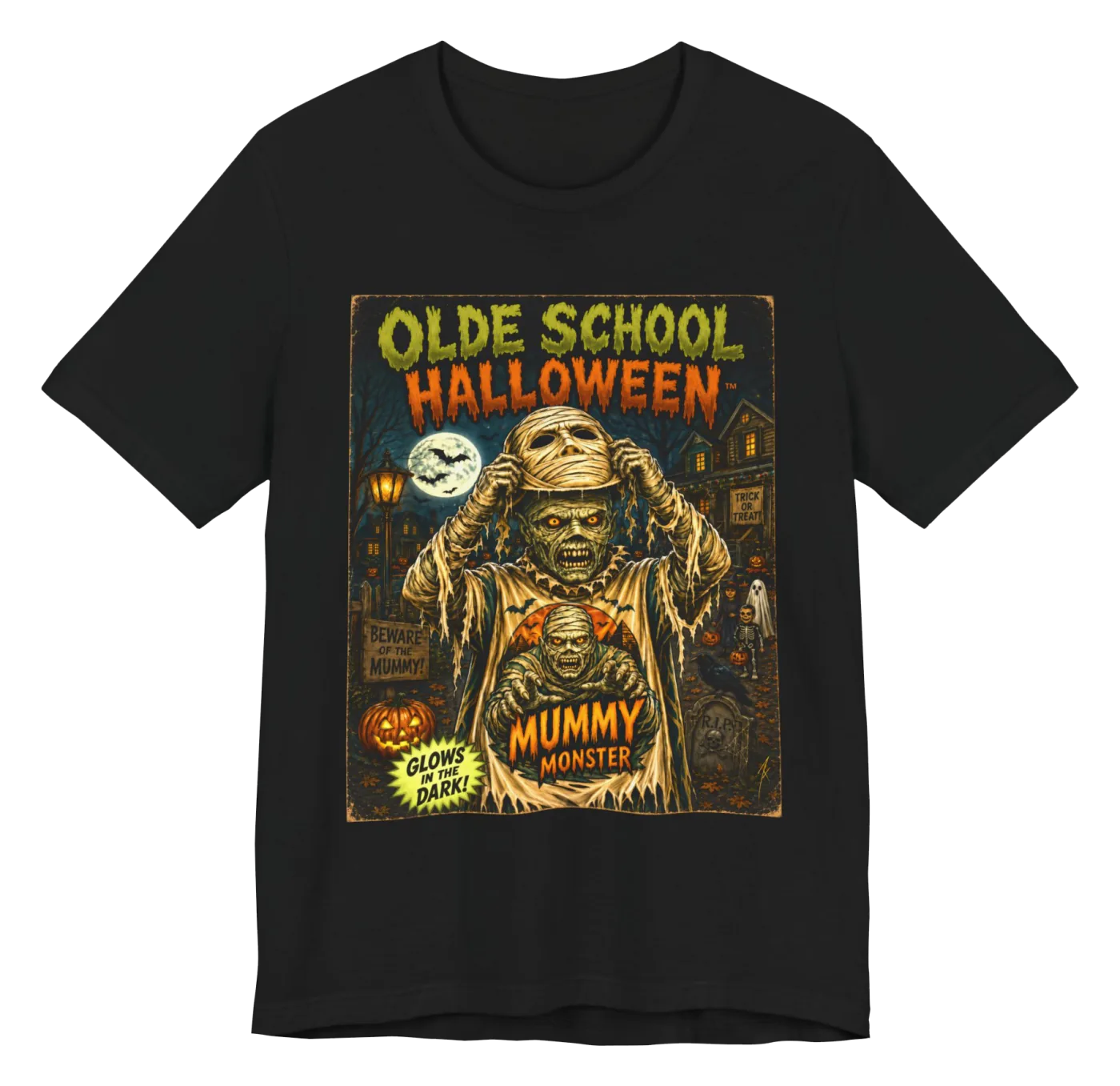
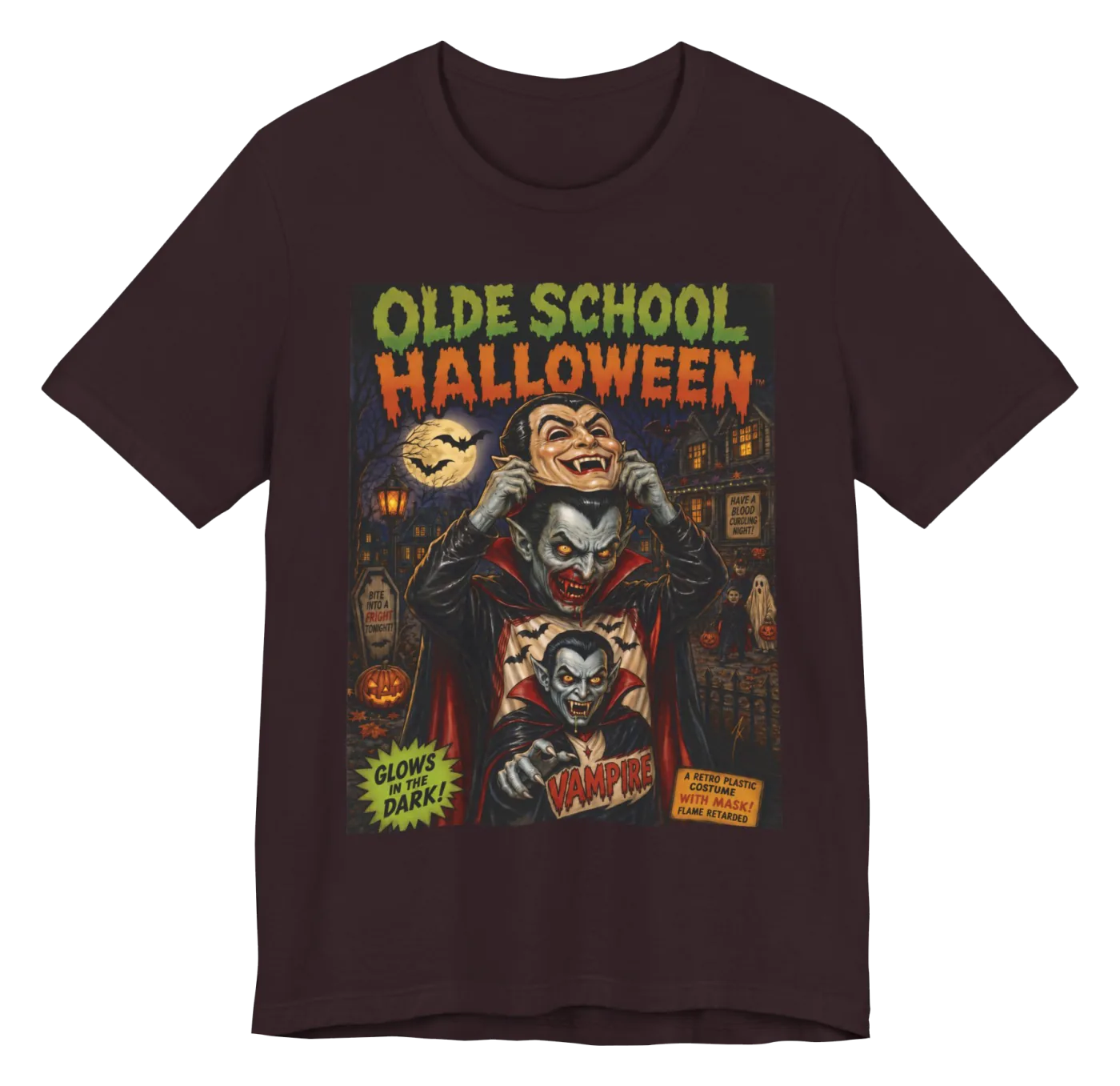
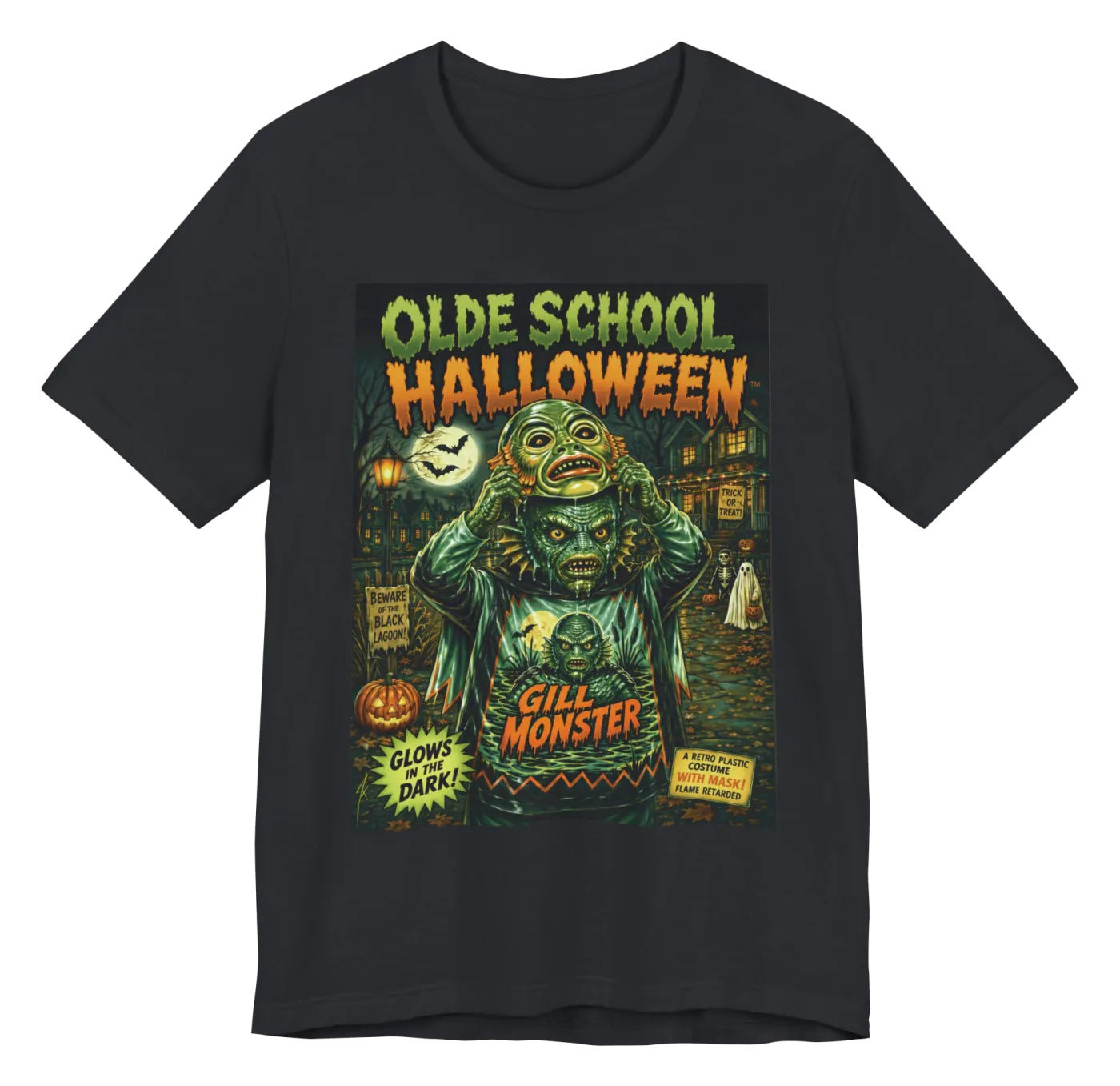
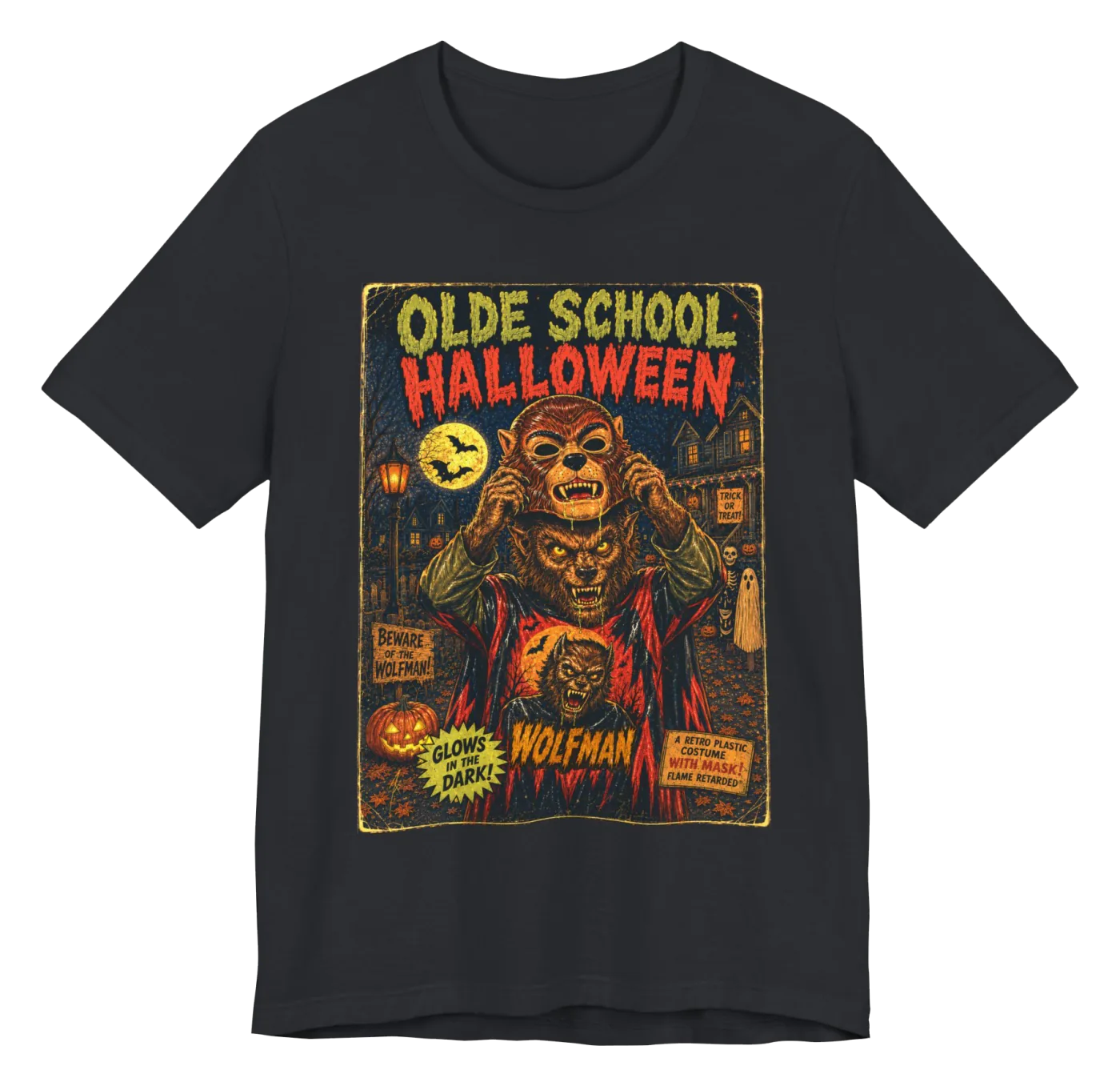
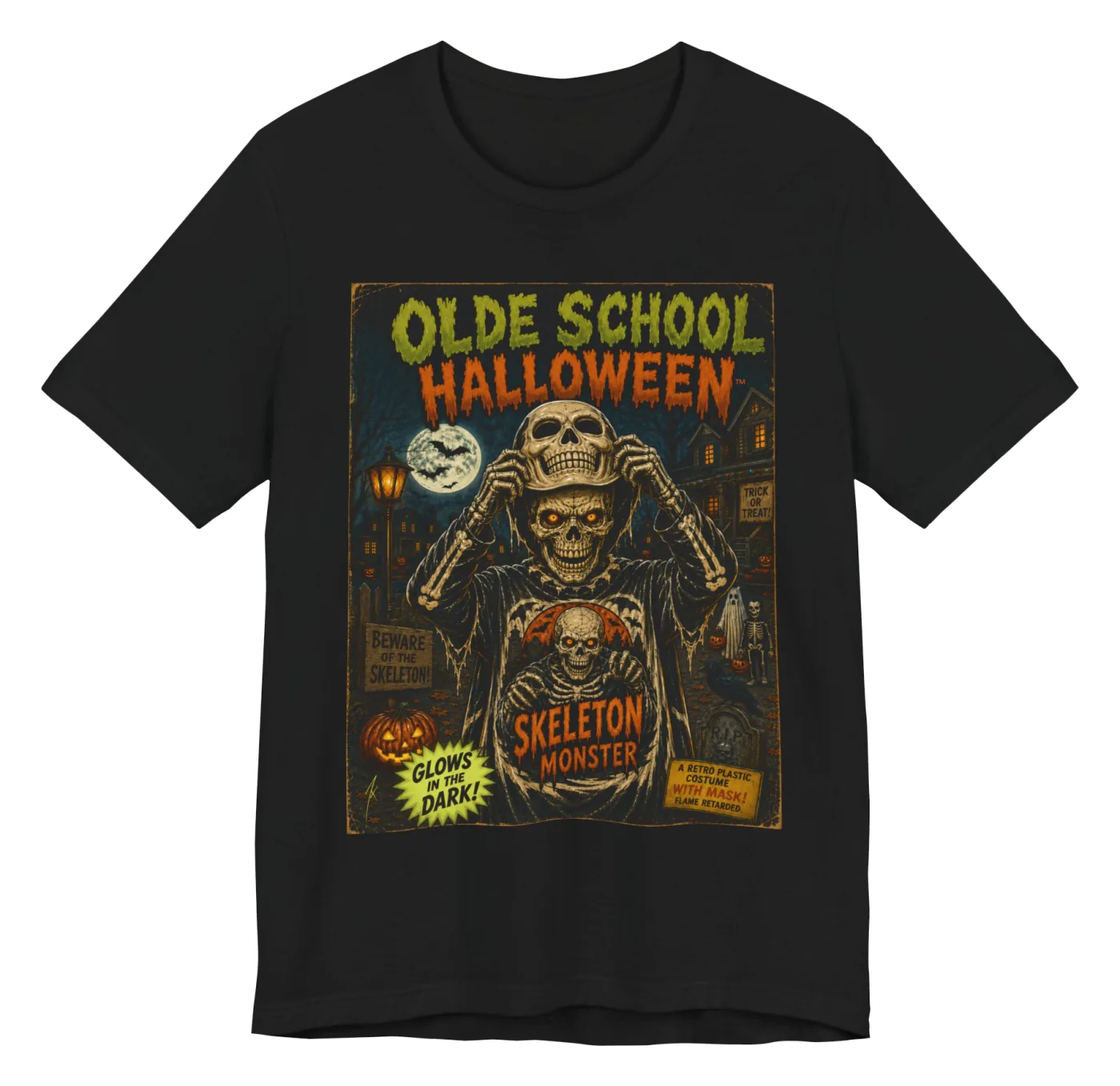
A one-piece vinyl smock, worn over your coat, printed with a picture of the character — the character's costume, their emblem, and very often their face and their name in large friendly letters across the chest. And then, over your own face, a thin plastic mask of that same character.
You wore a picture of Superman while wearing Superman. You were carrying an illustrated label identifying who you were supposed to be, in case the mask didn't get the point across. Which, in fairness, it frequently didn't.
No child in America ever objected to this. It was, to a kid standing in an aisle in 1979, a completely coherent object. The absurdity of it only arrives about thirty years later, and when it arrives it is very funny and also a little tender, because it is the exact logic a seven-year-old uses when they draw a picture of themselves and write their name underneath it.
The mask
Semi-hard vinyl, hand-painted in the American plant, with three holes: two eyes and one mouth. A thin white elastic band, stapled to each side.
The staple was the design's fatal flaw and every single one of us found this out personally. It tore through the vinyl somewhere around the fourth house, and the rest of the night was conducted with one hand holding the mask to your face — a small public humiliation performed in front of the neighbourhood.
If the staple held, you got the other experience. Your breath came back at you off the inside of the mask. Condensation ran down the inside of the plastic and pooled at your chin. Your peripheral vision went to nothing, so you learned to walk with your whole head turning like a searchlight, which is a large part of why so many parents stayed at the kerb.
And the smell. Warm vinyl and paint, intensified by your own breath, at close range, for two hours. It is the single most reliably shared sense memory of the entire American twentieth-century Halloween, and it belongs to a factory in Brooklyn.
The packaging deserves its own paragraph. Ben Cooper boxes advertised a safety seal, flame-retardant fabric, double-vented masks, and — this is printed on a real costume in a real museum collection — extra large eye holes. Which tells you two things at once: that the eye holes were a known problem, and that these were the improved ones.
The collar tag on that same costume states that the garment was treated to temporarily retard flame, is not washable, and that washing removes the flame retardant. Read that again. The fire protection on a child's Halloween costume was explicitly labelled as a temporary condition that could be rinsed off. Nobody wrote a letter. It was 1965 and that was simply the deal.
By the 1970s the company was selling a line with reflective glitter built into the vinyl so that drivers could see kids in the dark. It was a genuine safety innovation, and it was defeated every single year by the coat everyone had to wear over the costume anyway.
The licensing machine
The real business was never the vinyl. It was the licences, and Ben Cooper was frighteningly good at them.
The company licensed Spider-Man in 1963, when Spider-Man was a fairly obscure character in a fairly obscure comic. It was the first company to licence anything depicting a Marvel character. It took Batman in 1964, a year before the television series made him unavoidable. Over the decades it carried Disney, DC, Sesame Street, He-Man, and essentially every property a child might reasonably want to be for one night.
Getting a licence was half of it. The other half was speed — turning a summer film into a boxed costume on a shelf by September, in an era when that meant tooling, printing, shipping and a retail buyer's confidence, all inside a few months.
Ben Cooper himself did field research. On Halloween night he would sit in the back of an Oldsmobile in his Long Island neighbourhood, watching what the kids were actually wearing, counting. It's a wonderful image: the Halston of Halloween, unrecognised in a parked car, taking notes on his own market as it walked past the window carrying pillowcases.
The costumes cost about a dollar and a half in the mid-sixties and two to five dollars by 1979. They were sold in the same chain stores where you bought socks. That was the entire strategy, and for thirty years it was unbeatable.
The three companies you also can't name
Ben Cooper was one of a big three. The others were Collegeville, out of Pennsylvania, and the H. Halpern Company — Halco. Between them they clothed the holiday.
The high end belonged to Don Post, whose rubber masks were the objects of desire: heavier, sculpted, actually frightening, and priced out of the reach of an ordinary trick-or-treat budget. If you were a kid who understood the difference, the Don Post mask in the shop was the thing you wanted and the Ben Cooper box was the thing you got.
What killed it
Three things arrived at once in the 1980s.
The first was the candy panic — the razor-blade scare that mutated after the 1982 Tylenol poisonings into a nationwide conviction that trick-or-treating was dangerous. Towns shortened it, cancelled it, moved it into gymnasiums. A company whose entire revenue depends on children walking door to door does not survive a decade of that, and Ben Cooper's profits fell hard.
The second was that the competition got better. Rubber and latex came down in price, standards rose, and the flat printed smock started to look like what it was.
The third was ordinary bad luck. The company filed for bankruptcy in 1988. In January 1989 a facility in Georgia burned to the ground with millions of dollars of inventory in it. It emerged, relocated to Greensboro, North Carolina, and filed again — on the thirtieth of October 1991.
The day before Halloween. Fifty-four years of dressing the holiday, and it went under on the last possible business day of its own season. In 1992 the assets went to Rubie's, and the name came off the boxes.
What the name being gone actually means
The name is back now, in a small way. The trademark was bought and the brand relaunched in 2016. There was a documentary in 2024. Collectors pay real money for a sealed box, and the boxes themselves — the graphics, the window, the face looking out — turn out to be the part people wanted all along.
But the reason the name vanished is worth sitting with, because it is the opposite of what it looks like. Brands disappear when they fail. This one disappeared because it won so completely that it stopped being a brand and became a category. For thirty years, in most of America, Halloween costume meant a printed smock and a vinyl face with three holes in it, and no adjective was required.
Everybody remembers the smell. That is the strongest possible result. The smell is inside the memory, wired to the porch light and the cold and the sound of the elastic snapping, and no logo ever gets in there. A logo is something you look at. The smell of the inside of that mask is something you were.
Shirts from this one
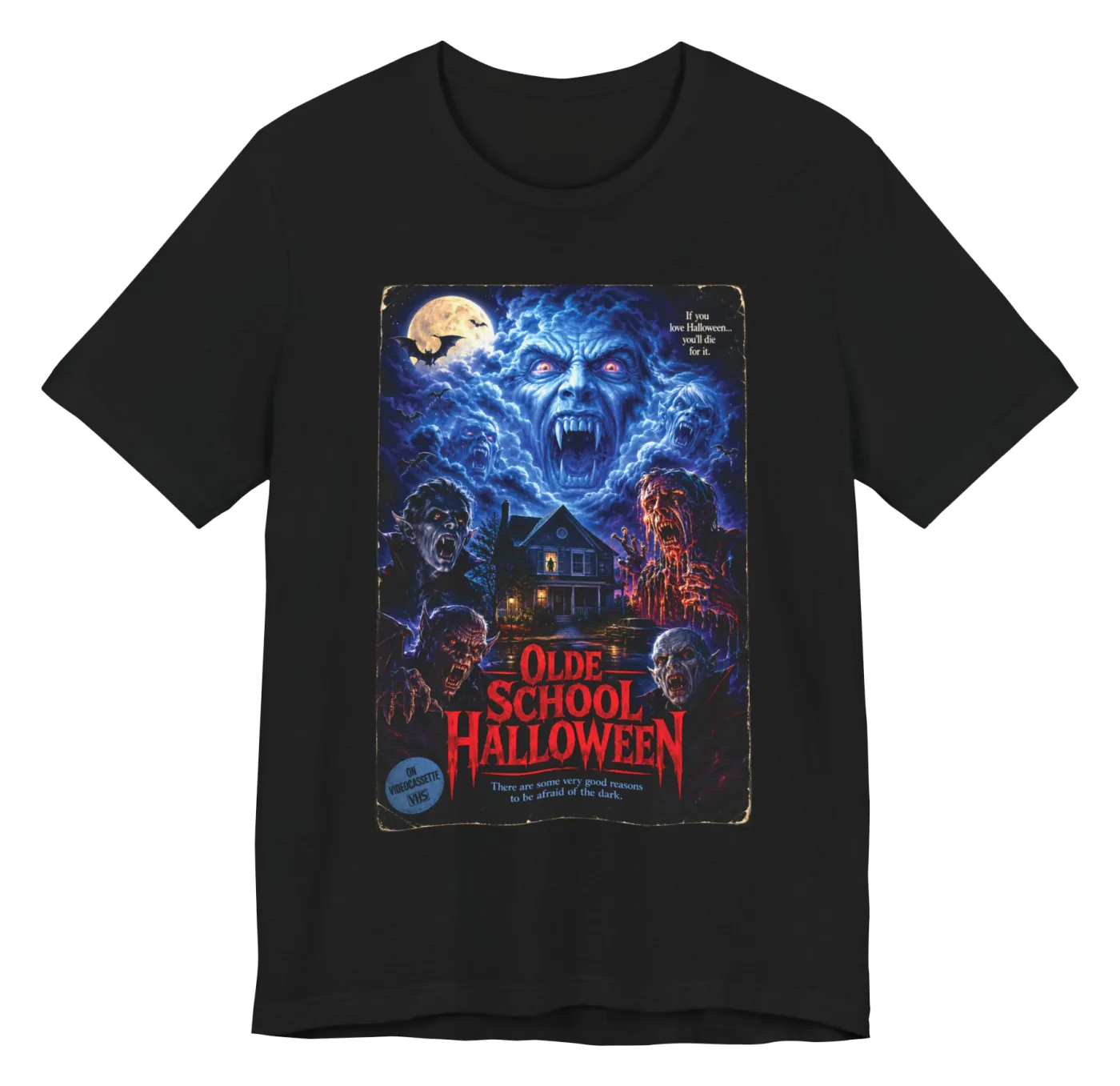
The format, worn by the monsters who invented it.
The Porchlight
New shirts. Olde stories. First word on every sale.
Twice a month, thereabouts. Unsubscribe whenever.