
The Morgue / Candy Panic
The Candy Panic
How a crime that never happened ended homemade Halloween forever
The apple you were told to throw away
If you were a kid any time between about 1970 and 1990, you knew the drill. You did not eat anything in the bag until an adult had been through it. Anything unwrapped went in the trash. Anything homemade went in the trash faster — the fudge from the lady on the corner, the caramel apple, the popcorn ball wrapped in cling film with a twist of ribbon. Straight in the bin, and the neighbour never knew why her plate came home empty every year.
Some towns ran candy X-rays at the local hospital. Genuinely. You could take your pillowcase down to the emergency room and have your Milk Duds put through a radiology machine by a technician who had better things to do, and everyone involved treated this as a sensible use of a Saturday.
The fear had a very specific shape: a razor blade, pushed edgewise into an apple, invisible from the outside. Not poison, not needles at first — a razor blade in an apple. It's such a good image that it survived fifty years without anyone ever finding one.
Joel Best goes looking for the bodies
In 1985, a sociologist named Joel Best published a study with Gerald Horiuchi that should have ended the whole thing. They went through news reports from 1958 to 1984 looking for confirmed cases of a child seriously harmed by contaminated treats given out by a stranger.
They found no confirmed deaths. The handful of incidents that turned up were either hoaxes, minor pinpricks with no injury, or — in the two cases everybody remembers — something much worse and much closer to home.
Best has kept the tally running for forty years since. It has not moved.
That is the fact at the centre of this, and it is worth sitting with for a second, because it is genuinely strange. An entire national behaviour change, enforced by every parent in the country, sustained across three generations, built on a crime with no victims.
The two cases that weren't what they looked like
Detroit, 1970. A five-year-old named Kevin Toston died of a heroin overdose, and the family said it came from his Halloween candy. It hadn't. He had found his uncle's stash. The relatives, trying to protect the uncle, sprinkled heroin on the candy after the fact to give the story somewhere else to go.
Deer Park, Texas, 1974. Eight-year-old Timothy O'Bryan ate a Pixy Stix laced with cyanide and died. The Pixy Stix came from his father, Ronald Clark O'Bryan, who had taken out life insurance policies on both his children and needed one of them to pay out. He gave poisoned candy to four other children as cover, including his own daughter. None of them ate it. He was convicted, the papers called him the Candy Man, and Texas executed him in 1984.
Two dead children, and neither of them killed by a stranger. Both killed, in the end, by the people who were supposed to be checking the bag.
The panic kept the shape and threw away the details. This is what panics do — they need a monster in the dark, and a father with a filing cabinet full of insurance paperwork is not a monster you can teach your kid to avoid.
Then Chicago, and the lid came off
In late September 1982, seven people in the Chicago area died from cyanide placed in Tylenol capsules on store shelves. The killer was never caught. It was front-page news for weeks, and the weeks in question happened to run directly into the last week of October.
Whatever was left of anyone's scepticism died that autumn. The Tylenol murders proved the thing everyone had been half-imagining: a stranger really could put poison into something ordinary, hand it to you through a completely normal transaction, and vanish. It didn't matter that it happened in a drugstore rather than a doorway. The fear had found its proof of concept.
Tamper-evident packaging arrived within a year, and it never left. Every foil seal you have peeled off anything since 1983 traces back to that October.
What the panic actually killed
Not children. Homemade candy.
Before the panic, a Halloween haul was a mixed bag in the literal sense — commercial sweets alongside things people had made in their own kitchens. Popcorn balls. Candy apples. Fudge. Divinity. Wrapped taffy from the woman two streets over who did it every year and expected you to say thank you.
Afterward, one rule, absolute and unarguable: factory-sealed or in the bin.
Which was, for the confectionery industry, the single greatest piece of regulatory good fortune in the history of the holiday. Everything a neighbourhood could make at home was disqualified overnight, and the only remaining legal tender was a wrapped commercial product. Miniature packaging became the entire currency of Halloween. Not because anyone chose it. Because the alternative had been ruled unsafe by common consent.
Fear built the modern candy aisle. Nobody planned it that way, and it worked better than any marketing department could have dreamed.
The Red Scare for kids
It started with candy apples, because a candy apple is the perfect vessel for the story — heavy, opaque, and handed to you by somebody who made it. Then it spread to regular apples. Then to cookies. By the end, the rule wasn't about apples at all. If it didn't have a wrapper, it was suspect.
My mother was genuinely frightened. My father could not have cared less. That split ran through a lot of houses, and the mothers won, because in a panic the person who is worried always outranks the person who isn't.
And it worked its way down to us. There was an old lady at the end of our street, and she became the centre of every rumour the kids on that block had. Not because she did anything. Because she was old, and lived alone, and was at the end of the street. That was the entire case against her. We ran it like a tribunal at recess.
It was a Red Scare for children. Same machinery exactly — an invisible enemy, no evidence required, and the accusation doing all the work the proof was supposed to do.
The machinery is older than the candy aisle. In 1914 a man wrote a short story for a London newspaper, and within a year the country had eyewitnesses to something that never happened.
Looking back at it now from a distance of forty years, one thing stands out that none of us could have seen at the time. Every single unwrapped thing became dangerous, and every factory-sealed thing became safe, and that line got drawn so cleanly and so completely and so fast.
Who benefited from that, exactly?
The panic is not over, it just changes drugs
In 2022 the story came back wearing new clothes: brightly coloured fentanyl pills, supposedly designed to look like candy, supposedly destined for children's Halloween bags. It ran on every network. It was repeated by federal officials. It had the same structure as the razor blade, the same absence of victims, and the same total immunity to correction.
Nobody was passing out fentanyl at doorways in 2022 for the same reason nobody was passing out razor blades in 1974: the economics are insane, the risk is total, and the reward is nothing. Drugs cost money. Nobody gives them to strangers' children for free.
But the story is too good to die. It has a monster, it has a victim, it has an object you can hold up on television. And it says the thing that Halloween has always been slightly about anyway — that the door is open, the street is full of people you don't know, and your kid is out there in the dark with a bag.
The good part
Here is the thing the debunking usually misses.
The candy panic was hysteria, yes. It was also, for millions of us, the most attention our parents paid to Halloween all year. The kitchen table covered in the haul. A parent working through it piece by piece under the good light, holding a Snickers up like a jeweller. The negotiations. The tax.
It was a ritual of care dressed up as a safety inspection, and every kid who sat through it knew, at some level, that the real content of it was being looked after.
We were never in danger from the apple. We were in a warm kitchen at half past eight with a mountain of sugar and someone paying close attention to us, and that is a memory worth more than the fear that caused it.
Check the bag anyway. It was always the best part.
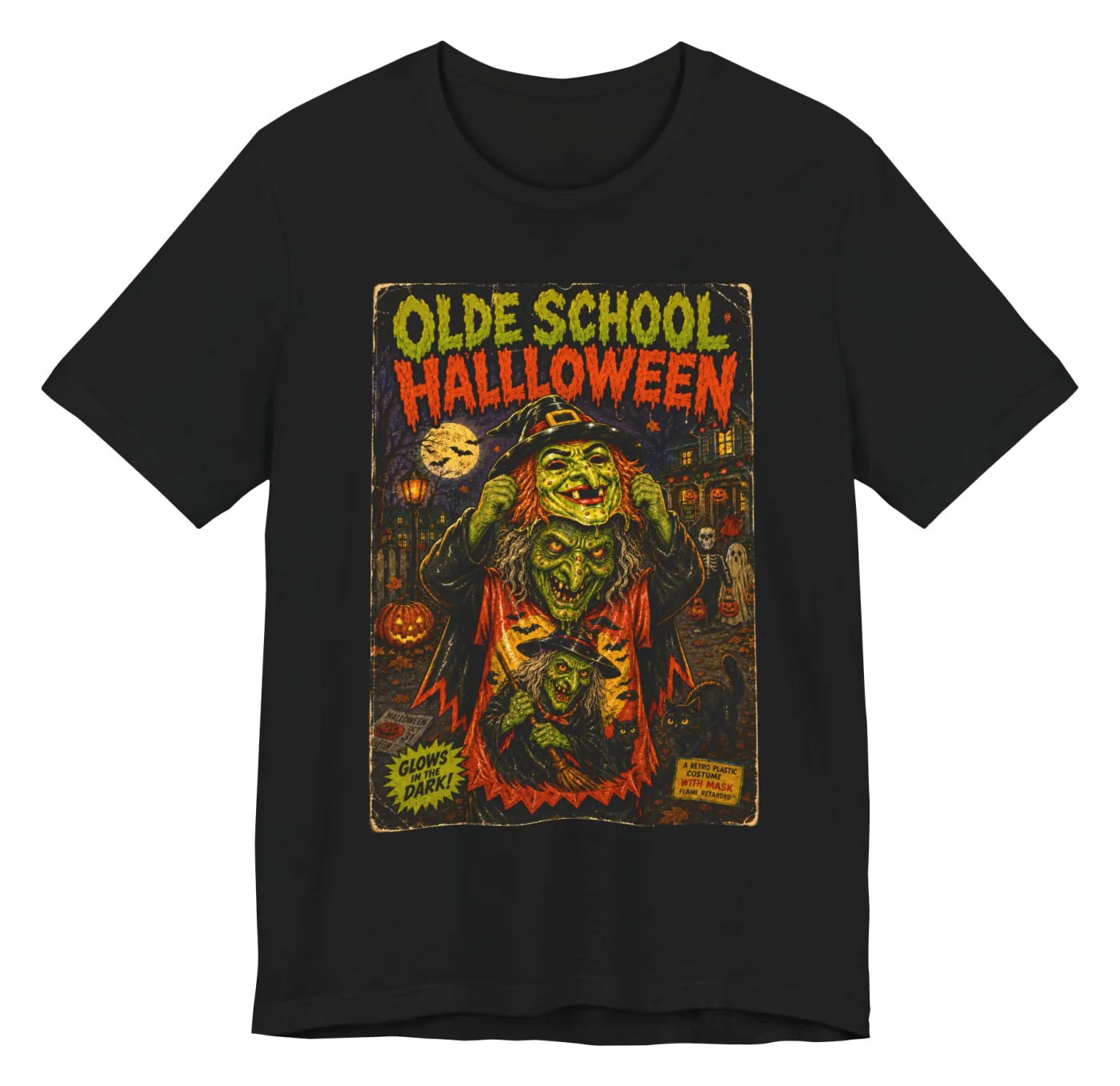
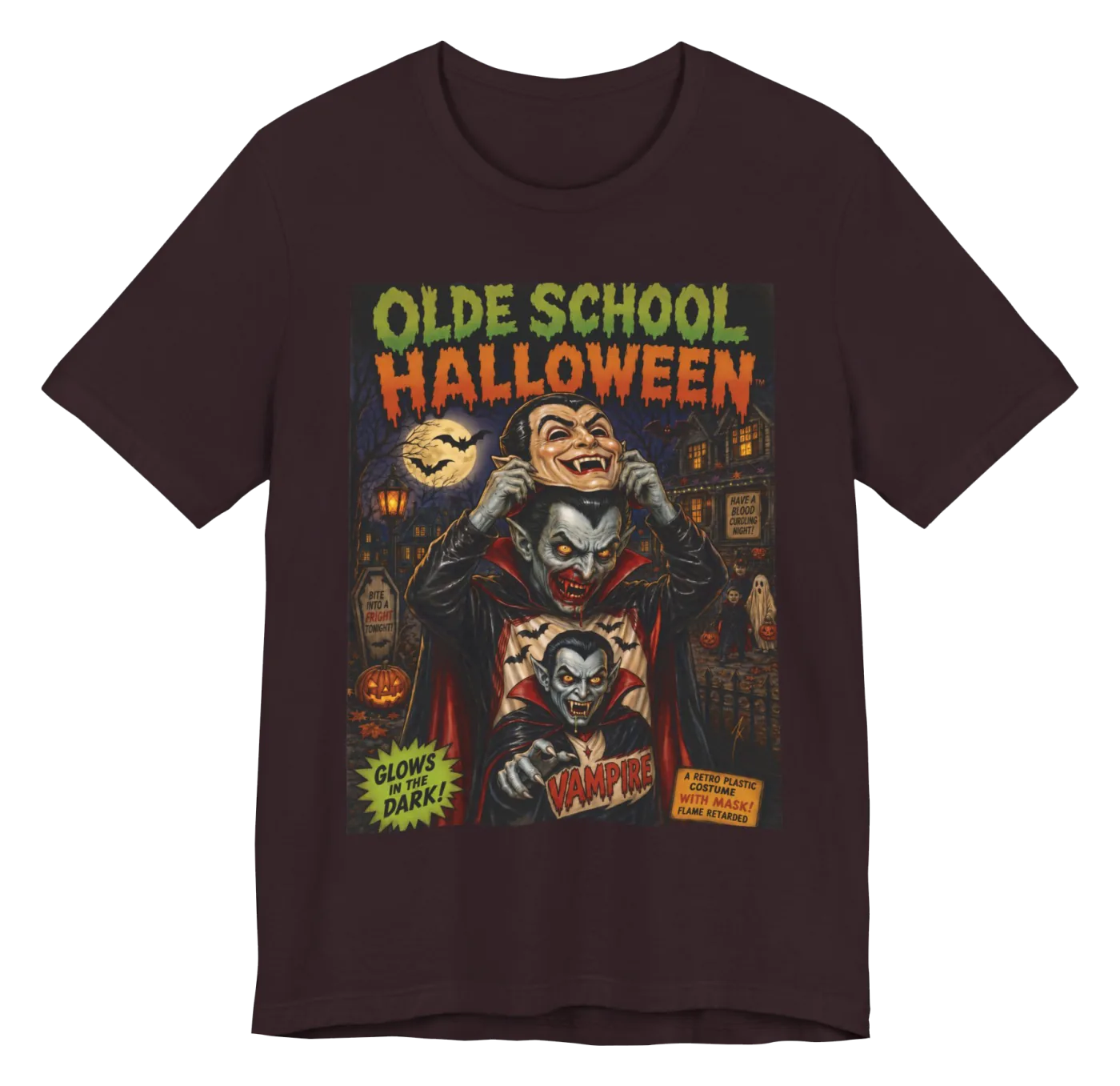
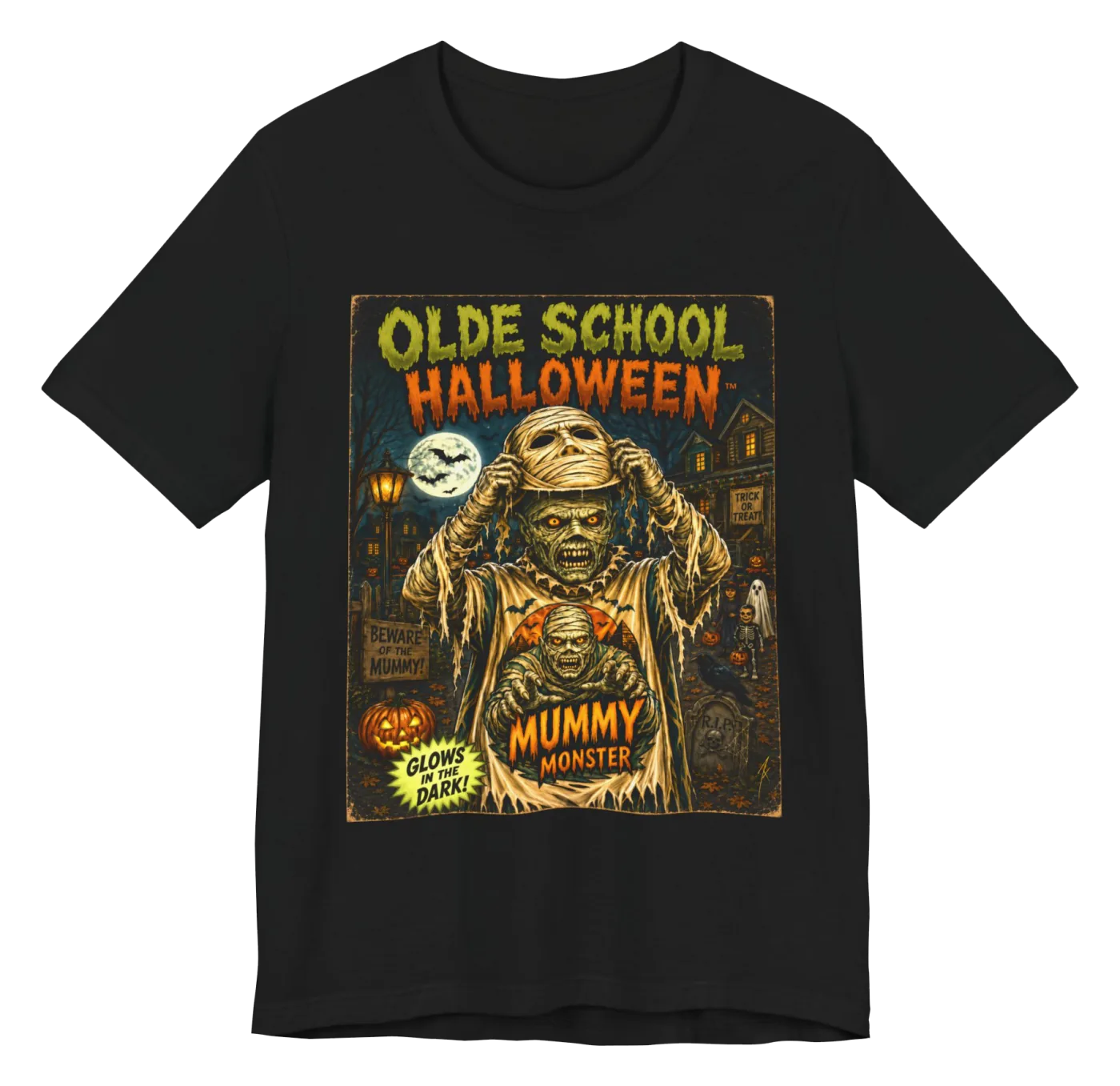
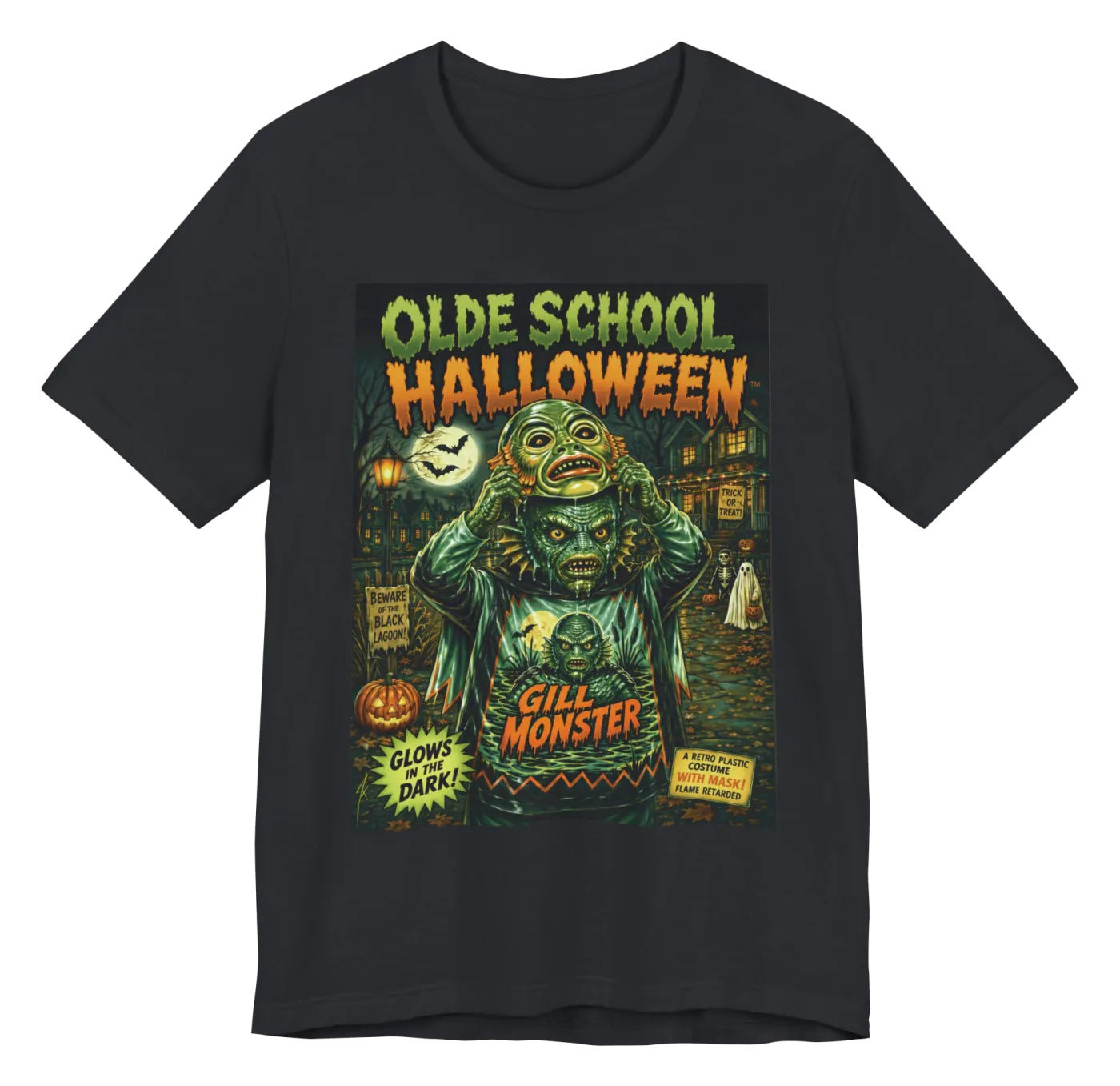
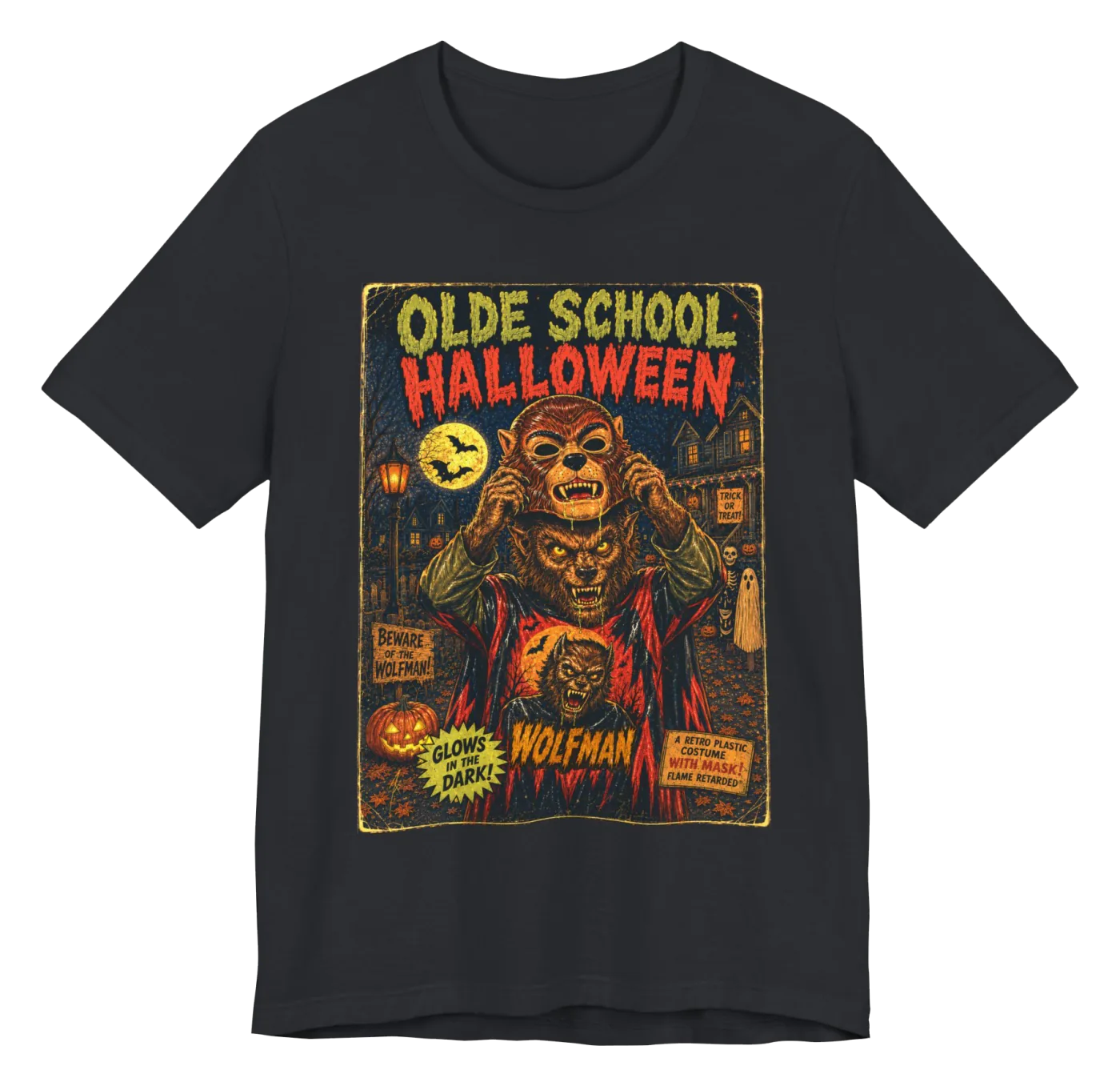
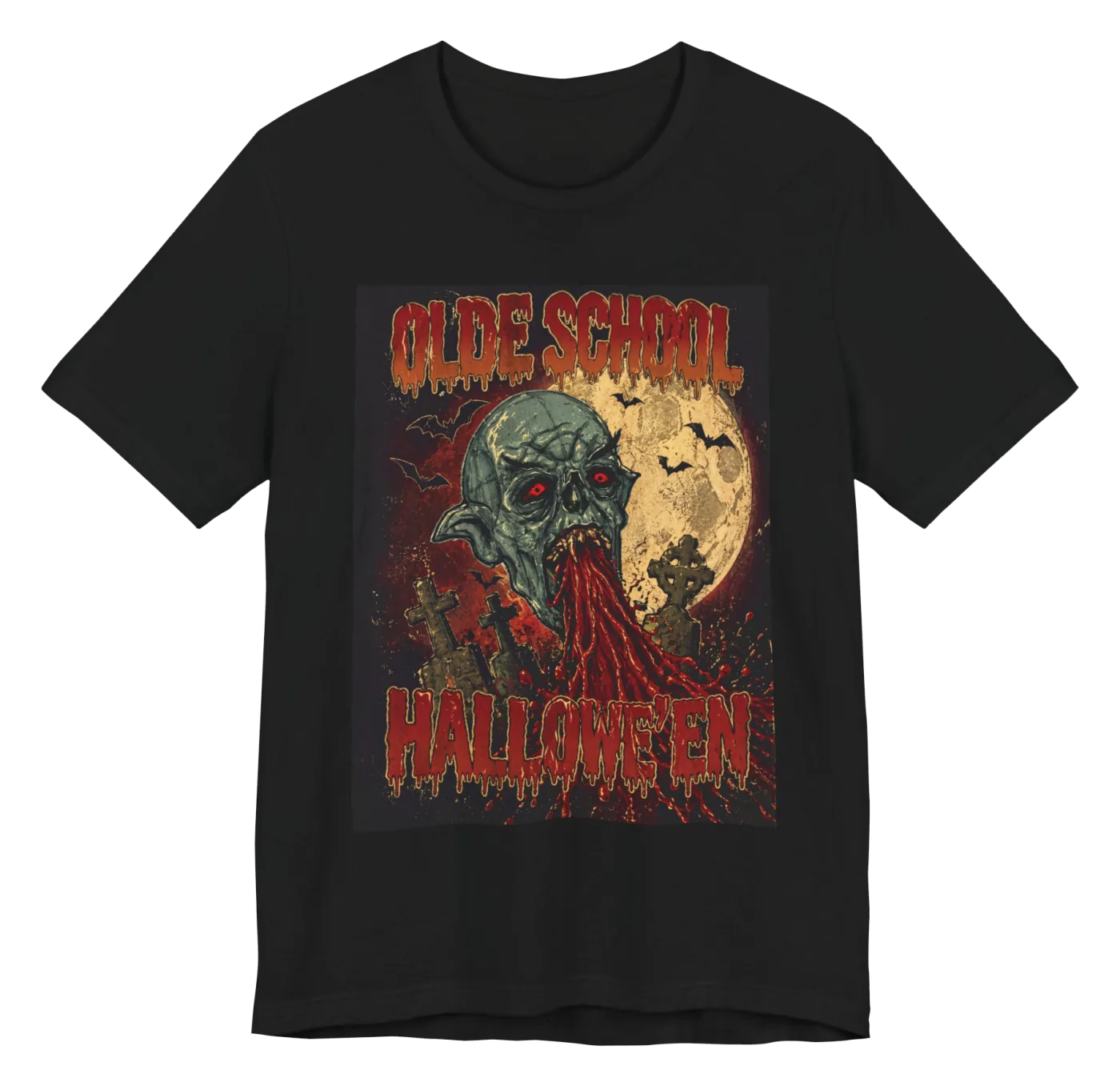
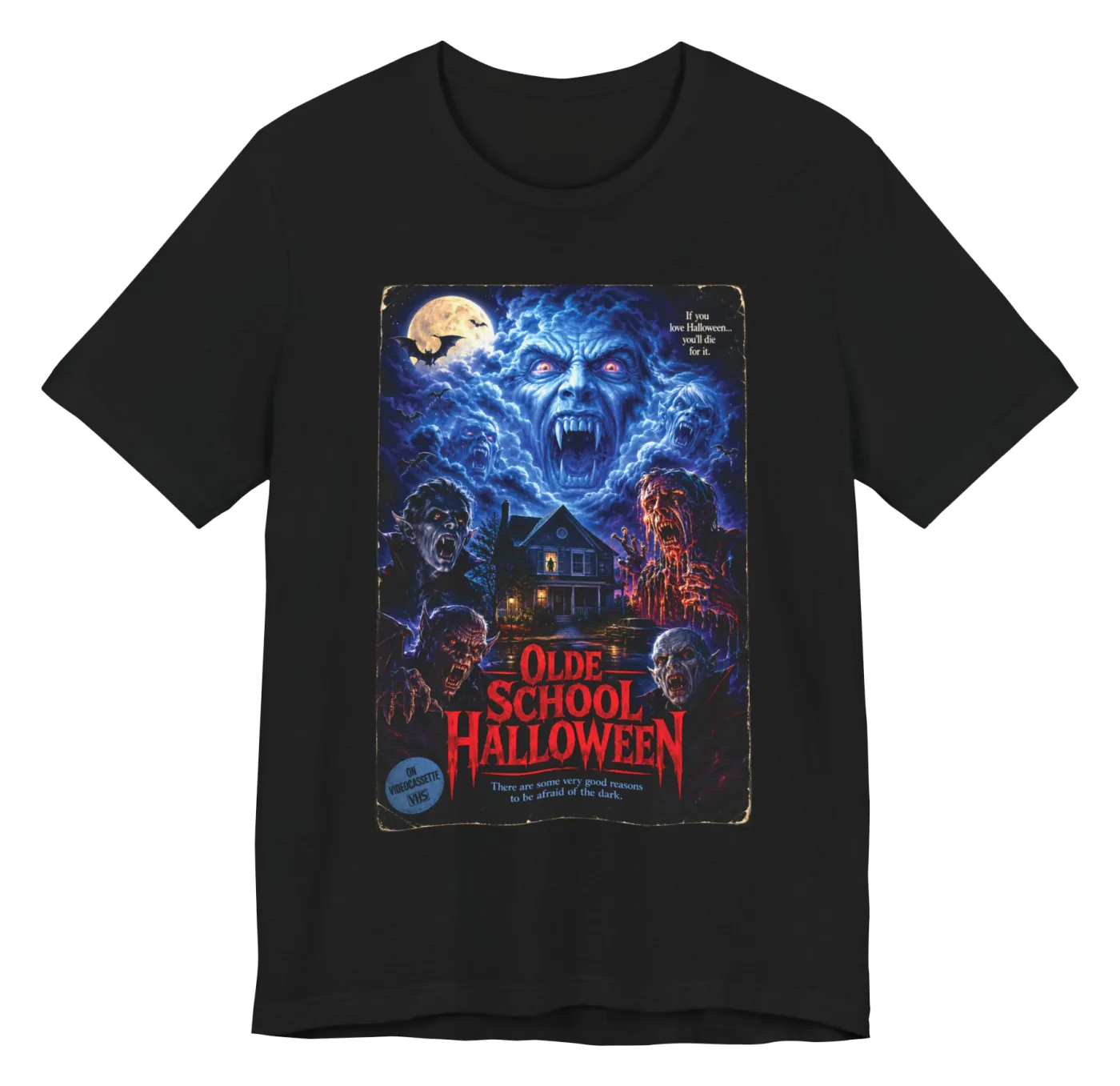
Shirts from this one
Wear the panic, or the reason for it.
The Porchlight
New shirts. Olde stories. First word on every sale.
Twice a month, thereabouts. Unsubscribe whenever.