
The Morgue / The Saturday Morning Ghost Racket
The Saturday Morning Ghost Racket
A woman in a Massachusetts living room set out to get monster cartoons off the air. What she got instead was the most durable monster cartoon ever made — one where the monster comes off at the end.
The complaint was about monster cartoons
In 1968, in the living room of a house in Newton, Massachusetts, a woman named Peggy Charren got a few friends together because she had looked at what her daughters were watching on Saturday morning and found it intolerable.
Her description of the problem was four words long. Wall-to-wall monster cartoons.
That phrase is worth sitting with, because of where this ends up.
Charren and three others — Lillian Ambrosino, Evelyn Kaye Sarson, Judy Chalfen — founded Action for Children's Television that year. It started as a handful of parents in a living room and grew to twenty thousand volunteer members. It eventually got the Children's Television Act through Congress in 1990, and Charren got the Presidential Medal of Freedom for it in 1995.
She was not a crank and she was not a censor. She said so herself, repeatedly, and meant it — she was proud of her First Amendment record and never once asked for a programme to be banned. What she asked for was pressure. Pressure on the networks, pressure on the FCC, pressure on the advertisers who were selling cereal to six-year-olds between the explosions.
Pressure is not censorship. But pressure gets answered, and the answer is the story.
What got cleared out
The slate that ACT went after by name is a list that will hurt some of you.
Space Ghost. The Herculoids. Birdman and the Galaxy Trio. Frankenstein Jr. Jonny Quest. Super President. The Fantastic Four. These were Hanna-Barbera's action-adventure line — drawn in a visual language a distributor had spent twelve years teaching to children — and the surrounding traffic — the loud stuff, the stuff with fists and rays and monsters that stayed monsters for the full twenty-two minutes.
By September 1969 virtually all of it was off the air.
Not one show. Not a trim. The whole genre, cleared off Saturday morning inside about eighteen months, and the studio that made most of it still had four hours a week to fill and a payroll to meet.
That is the vacuum. Everything that follows is somebody filling it.
Silverman had a hole in the schedule
Fred Silverman ran children's programming at CBS, and his problem in 1968 was arithmetic. He needed something that would revitalise the Saturday lineup and please the parent groups, in that order, and he needed it fast.
The template was sitting right there. Filmation's The Archie Show had landed the previous season and done well: four teenagers, a band, a laugh track, no violence to speak of. The network wanted more of that shape.
Silverman took the shape to Hanna-Barbera and added a twist he had borrowed from the old radio serial I Love a Mystery — send the teenagers somewhere haunted every week and make them work for it. Joe Ruby and Ken Spears wrote it. Iwao Takamoto designed it. It went through a string of working titles — The House of Mystery, Mysteries Five, and finally Who's S-S-Scared? — and by the spring of 1969 it was ready to show to the top of the building.
The night CBS said no
Silverman took it to CBS management in New York. Several accounts name network president Frank Stanton in the room; the ones that don't say only "the executives," and no document I can find settles which.
What every account agrees on is what happened. They looked at the presentation artwork and turned it down. It was too frightening. Not the plots, not the scripts — the pictures. Somebody had drawn monsters well enough that a television network in 1969 decided children should not be looking at them on a Saturday morning.
That is the hinge of this entire genre, and almost nobody knows it.
Silverman flew back to Los Angeles that same night. There is a famous bit of lore about what he listened to on the plane and what it gave him for a title, and it is a good story, and it is not the part that matters.
The part that matters is what Ruby and Spears did when he landed. They took the show back and reworked it to be more comedic and less frightening. The dog moved to the centre. The scares got a punchline attached. And the endings acquired the thing everybody now thinks was the point from the beginning: a mask, a motive, and a landlord.
Scooby-Doo, Where Are You! went on the air September 13, 1969, at 10:30 in the morning. The first episode was called "What a Night for a Knight," and what it put on screen was a suit of armour walking around a museum.
It ran two seasons — seventeen episodes, then eight — and finished its first-run life on October 31, 1970. Twenty-five episodes total. Everything after that is a different show wearing the same van.
The racket, properly understood
Here is where you have to be careful, because there is a tidy version of this story that is not quite true, and the tidy version is everywhere.
The tidy version says: censors forced the unmasking. The debunking ending exists because Standards and Practices demanded the supernatural be false.
Nobody has ever shown that. It is a clean line and it fits the facts on either side of it, which is exactly what makes it dangerous. What is documented is narrower and, honestly, more interesting: the art was rejected for being scary, the show was rebuilt to be funnier, and the format that came out the other end had a rubber mask at the bottom of it.
Whether the mask was a concession or a writer's instinct, no memo survives to say.
But look at what the mask does, week after week, across all twenty-five.
Very nearly every episode presents a genuine supernatural event — a knight that walks, a phantom in a swamp, a spectral miner, a snow ghost on a ski slope — and lets it be real for twenty minutes. It is real to the characters. It is real to the audience, who are six. And then, in the last ninety seconds, an adult is unmasked and explains that it was a scheme to devalue the property, or scare off the prospectors, or move the counterfeit plates.
The monster was a business. Almost every time. Twenty-five episodes across two seasons, and the whole franchise that followed was built on that rhythm.
That is the racket. Not a conspiracy at the network — a con inside the show, running weekly, in which the strange thing turns out to be a man with an economic motive and a costume budget. A generation of children were handed a monster and then handed a receipt.
And the monster always came first. That is the bit the format could never get around. You cannot debunk something you did not show, so every episode had to build the ghost before it could take it apart, and building the ghost is the part anybody remembers. Ask a room of adults what happens at the end of a given episode and you will get shrugs. Ask what the phantom looked like and you will get thirty seconds of enthusiastic description.
What the money was actually doing
None of this happens without limited animation.
Hanna-Barbera got called the General Motors of the business, and it was not entirely a compliment. Reused backgrounds. Cycled runs. Characters animated from the neck up so the mouths could be redrawn and the bodies could not. A chase sequence that could be dropped into any episode because the corridor was the same corridor.
It looks cheap because it was cheap, and cheap is the only reason four hours of Saturday morning existed at all. Nobody was funding full animation for a timeslot that existed to sell cereal. The economics made the format, the format made the volume, and the volume is why a show about four teenagers in a van ended up running, in one incarnation or another, for over fifty years.
At its peak the studio was turning out a share of all Saturday morning animation that gets quoted as high as two-thirds in a single year — a figure worth treating as trade legend rather than audited fact, though nobody disputes the shape of it. One building. One production method. One reused corridor.
The thing Charren never got
Peggy Charren wanted fewer monster cartoons and better children's television. She got the second one — genuinely, and the country is better for it, and anybody who has ever put a small child in front of something decent on a Saturday owes her something.
She did not get the first one.
What the campaign against wall-to-wall monster cartoons produced was the single most durable monster cartoon ever made, a franchise still in production five decades later, whose entire commercial engine is a new monster every week. The pressure did not remove the monsters. It negotiated their terms of release.
They were allowed to stay, on the condition that they be taken back at the end.
And if you refuse the condition
Which brings us round to why any of this is on a t-shirt site.
Take the last ninety seconds off. Do not unmask anybody. Let the knight in the museum stay a walking knight, let the thing in the swamp stay a thing in the swamp, and see what you are left with.
You are left with 1969's rejected artwork — the same faces that were, that same autumn, stacked to the ceiling in a drugstore aisle. The stuff CBS looked at and said no to. That is the whole of the SPOOKYVISION series — the version that never got softened, drawn as though nobody was coming to take it back.
The fortune-teller at the bottom of the castle path is not running a scam on the deed. The mummy is not a curator in wrappings. There is nobody inside the armour, and there was never going to be.
Shirts from this one
Twelve shirts. The version that never got unmasked.
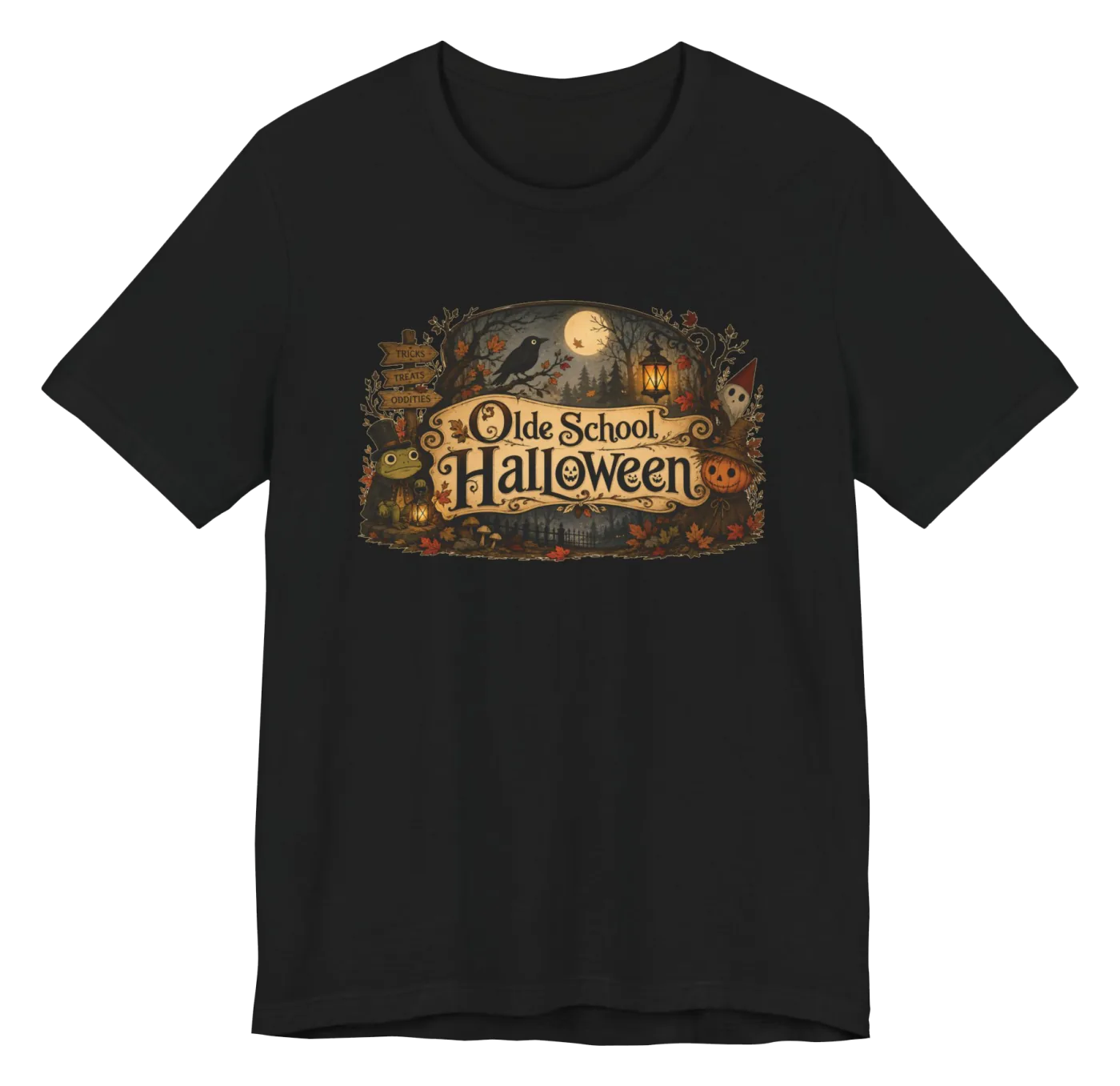 Folksy Hallowe'en
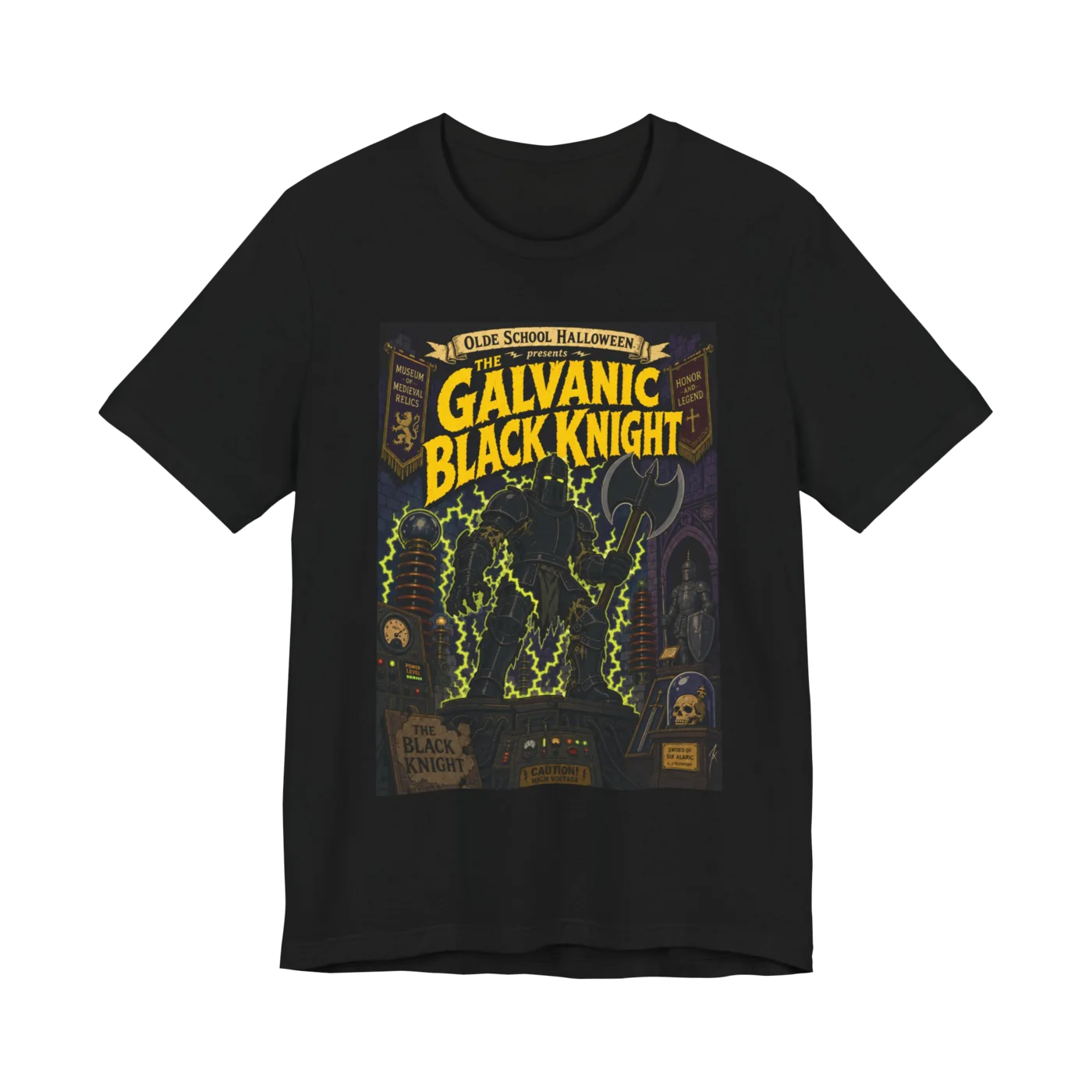 The Galvanic Black Knight
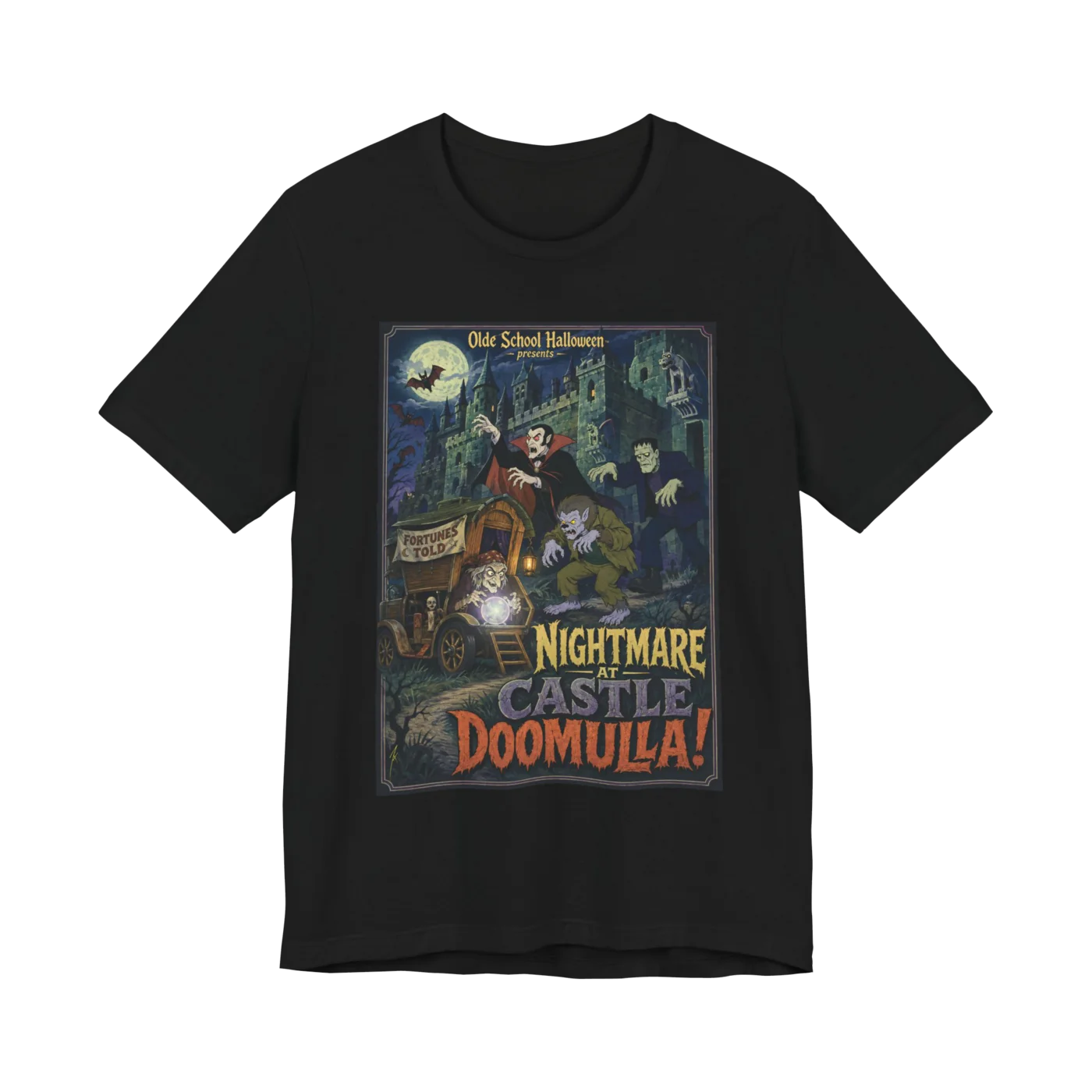 Nightmare At Castle Doomula!
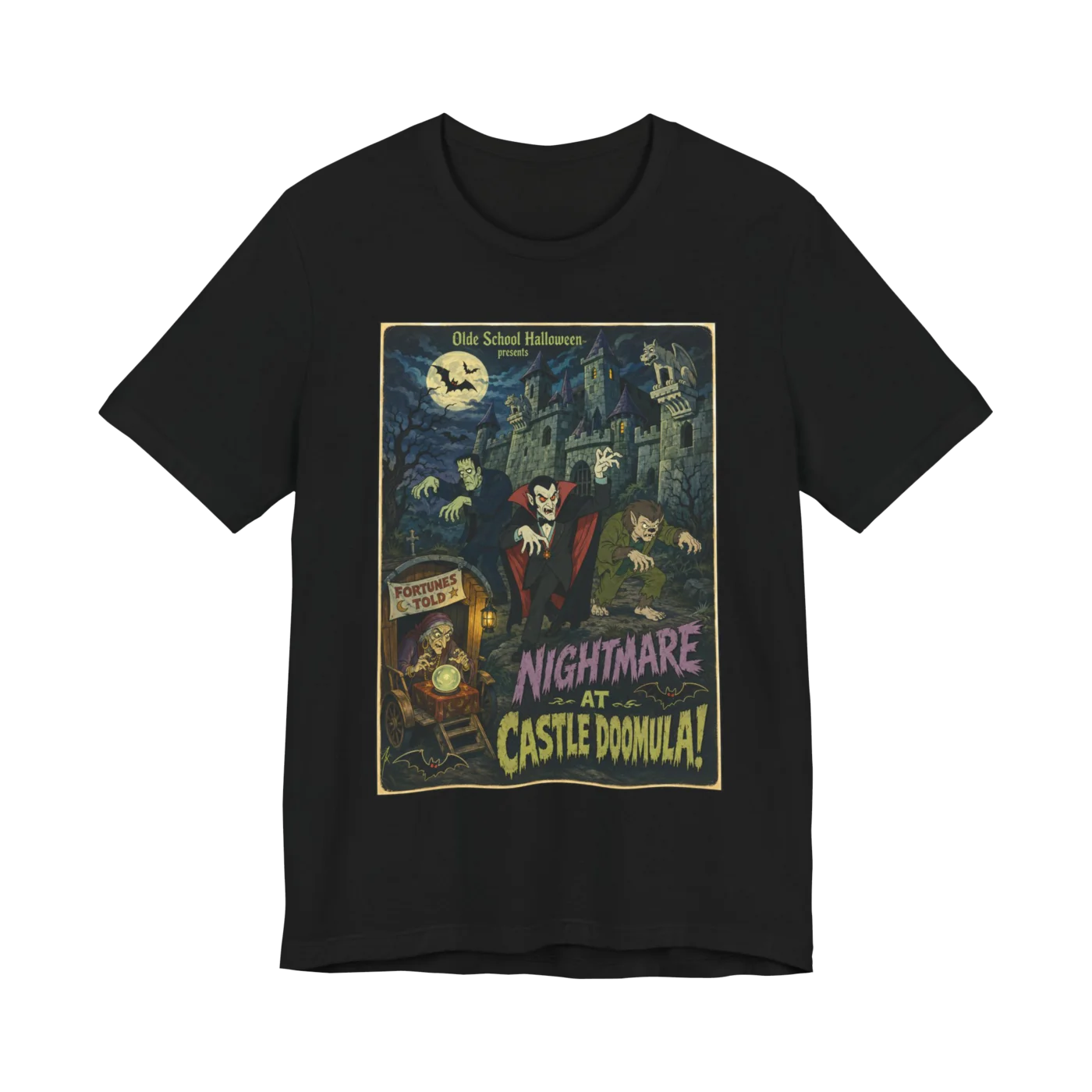 Nightmare At Castle Doomula! 2
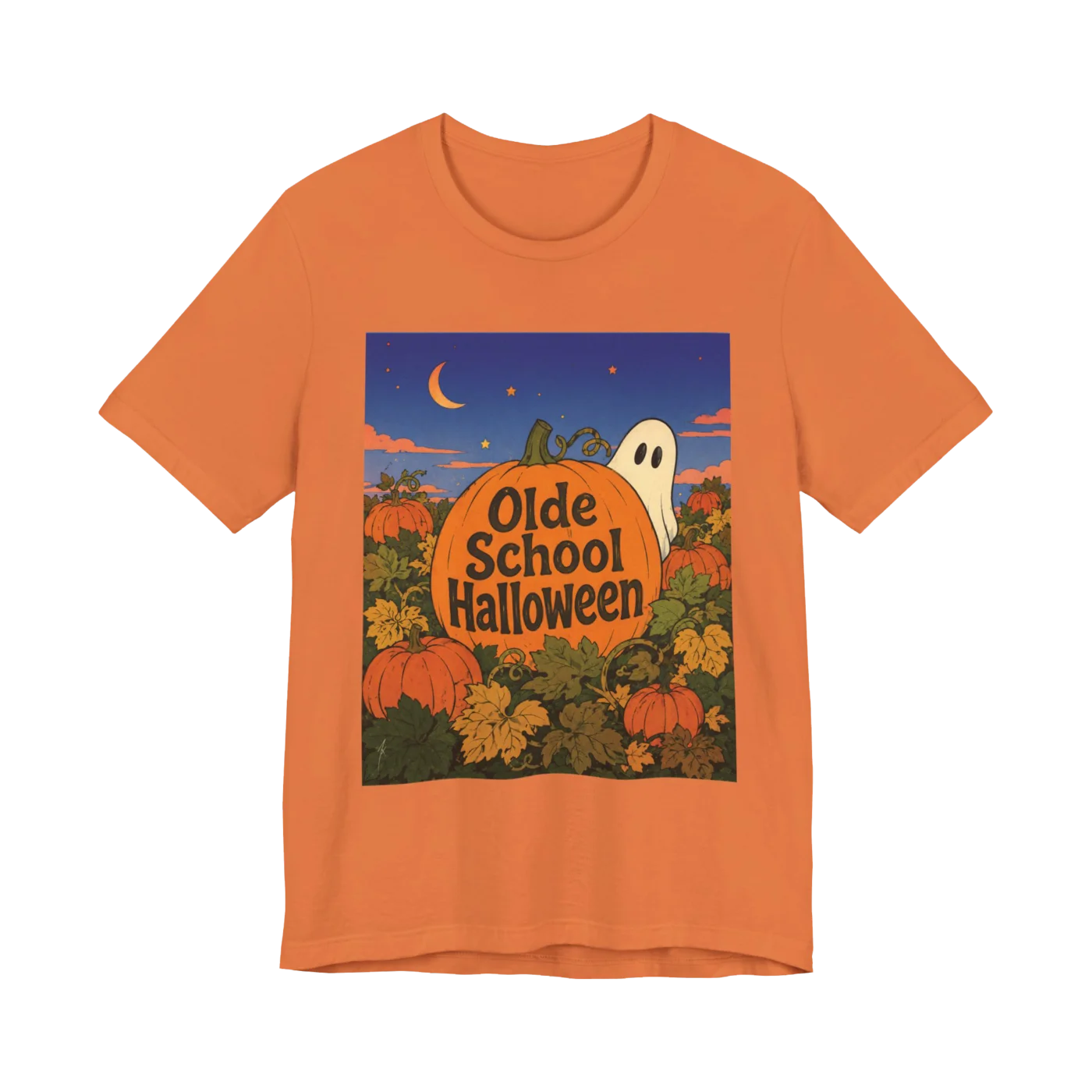 Pumpkin Patch Halloween
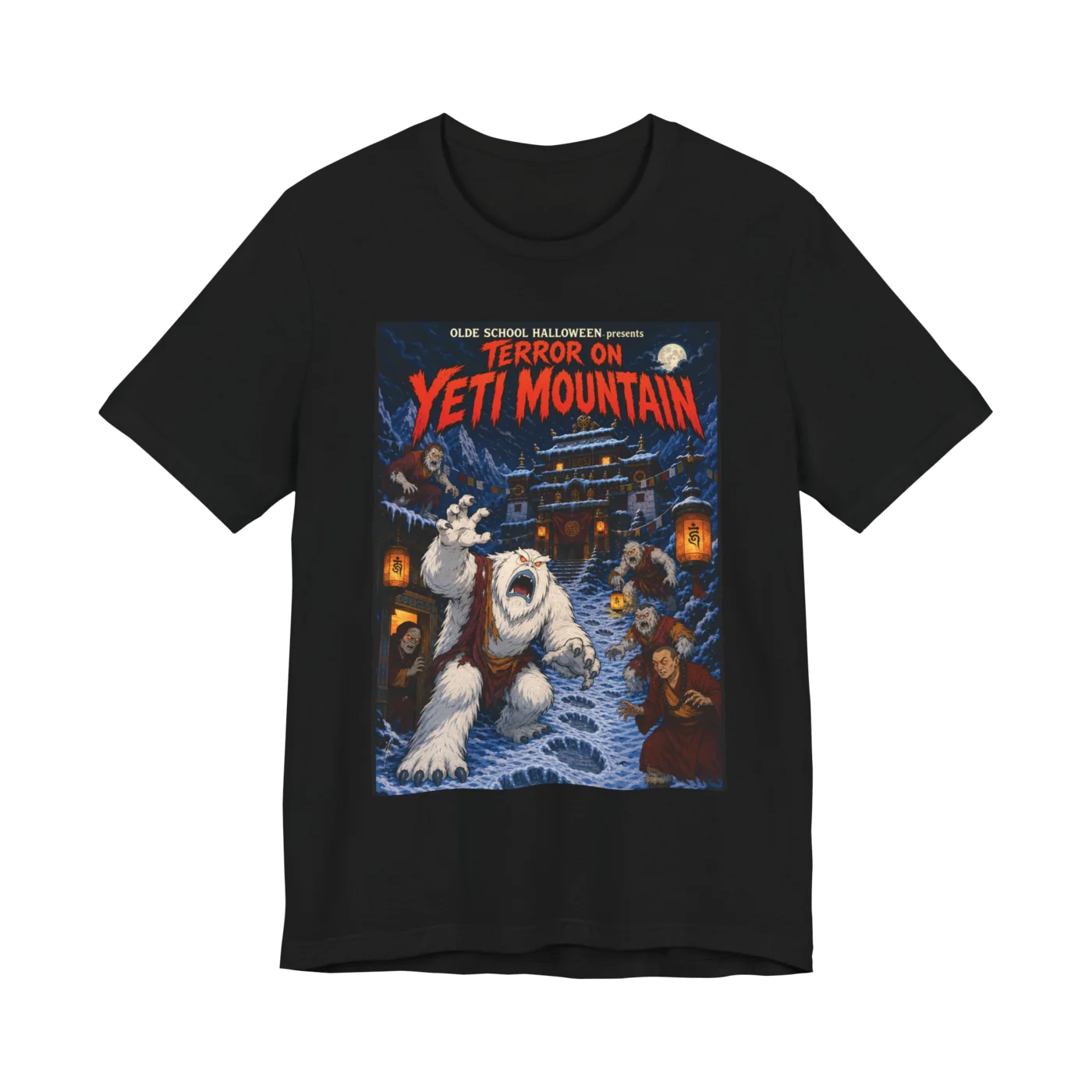 Terror On Yeti Mountain
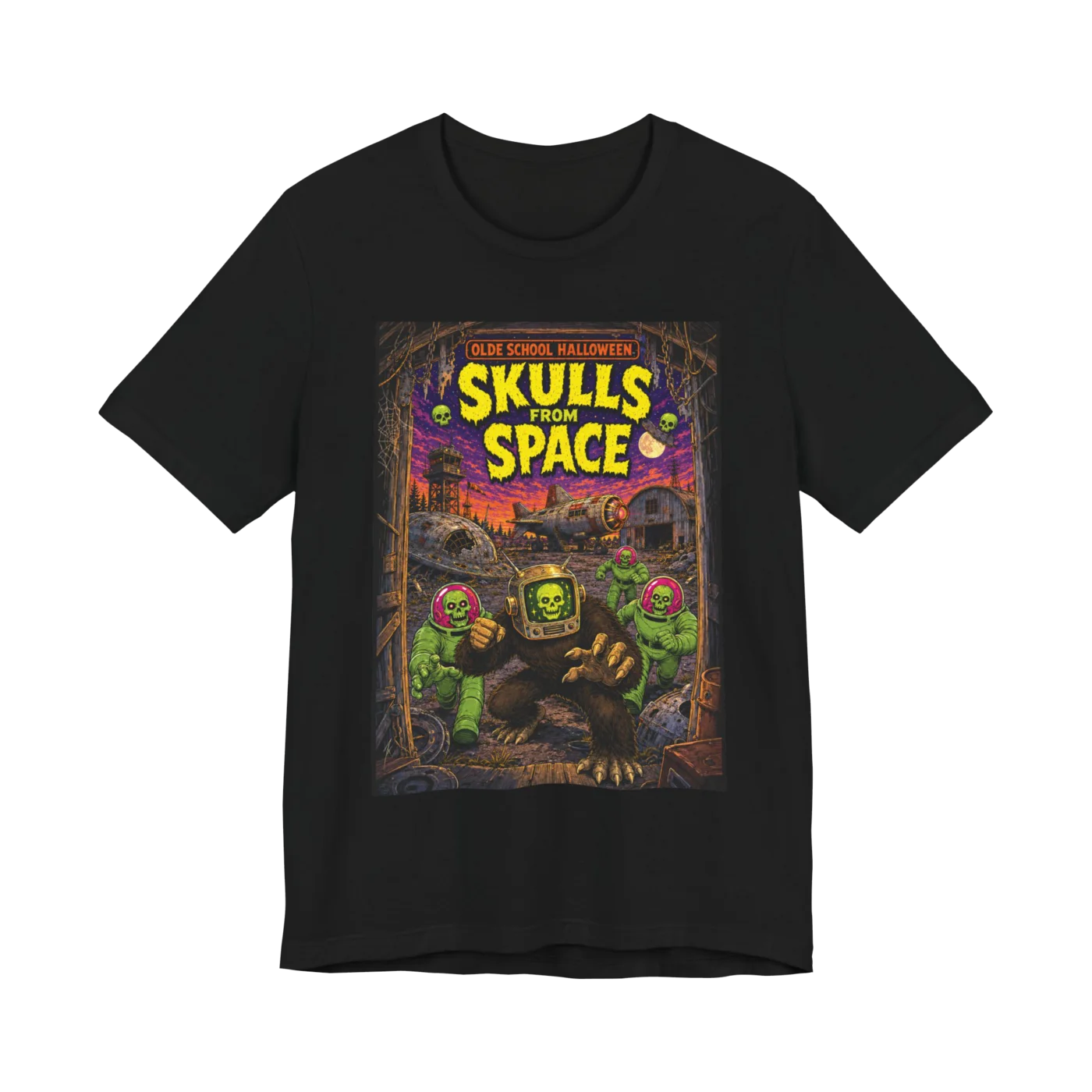 Skulls From Space
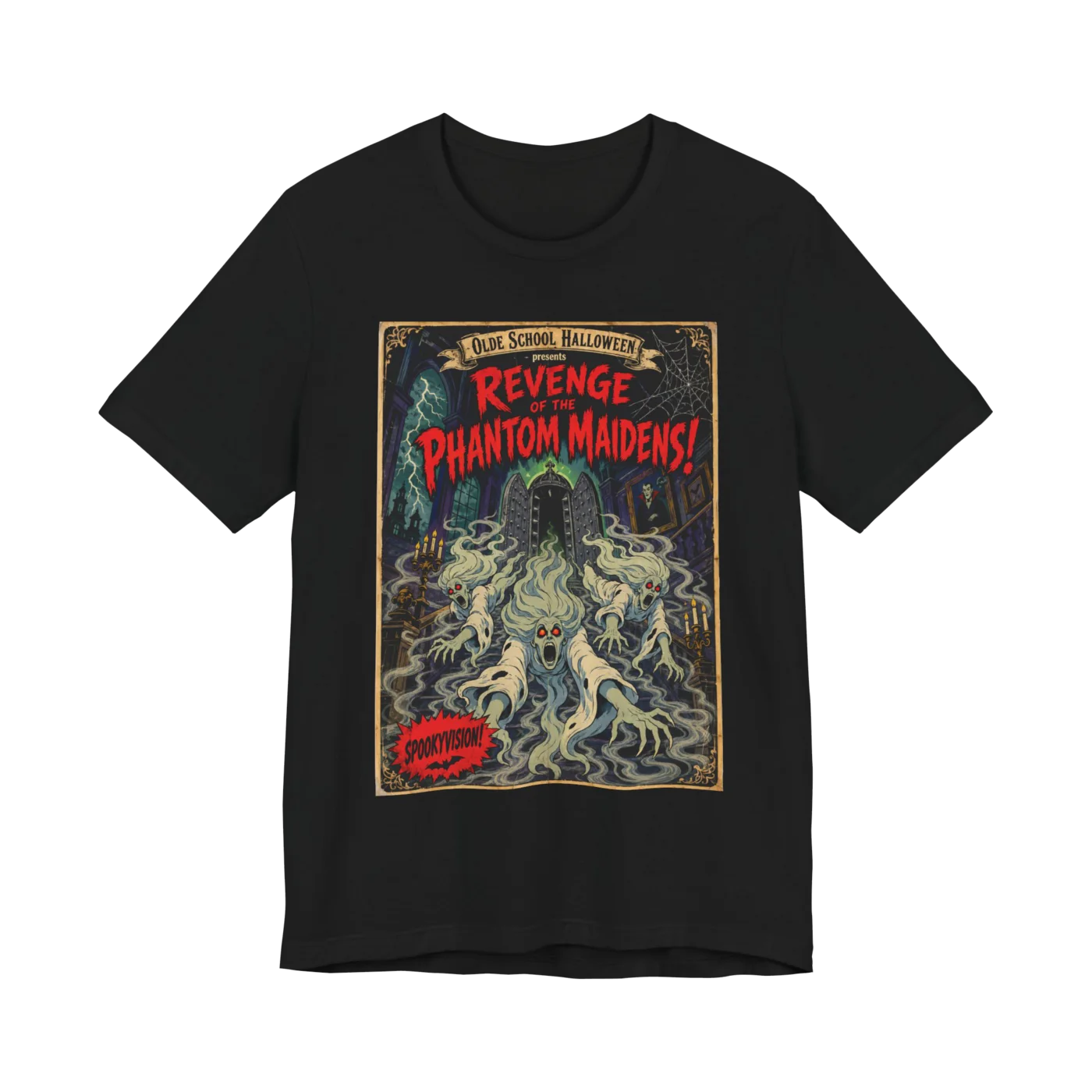 Revenge Of The Phantom Maidens!
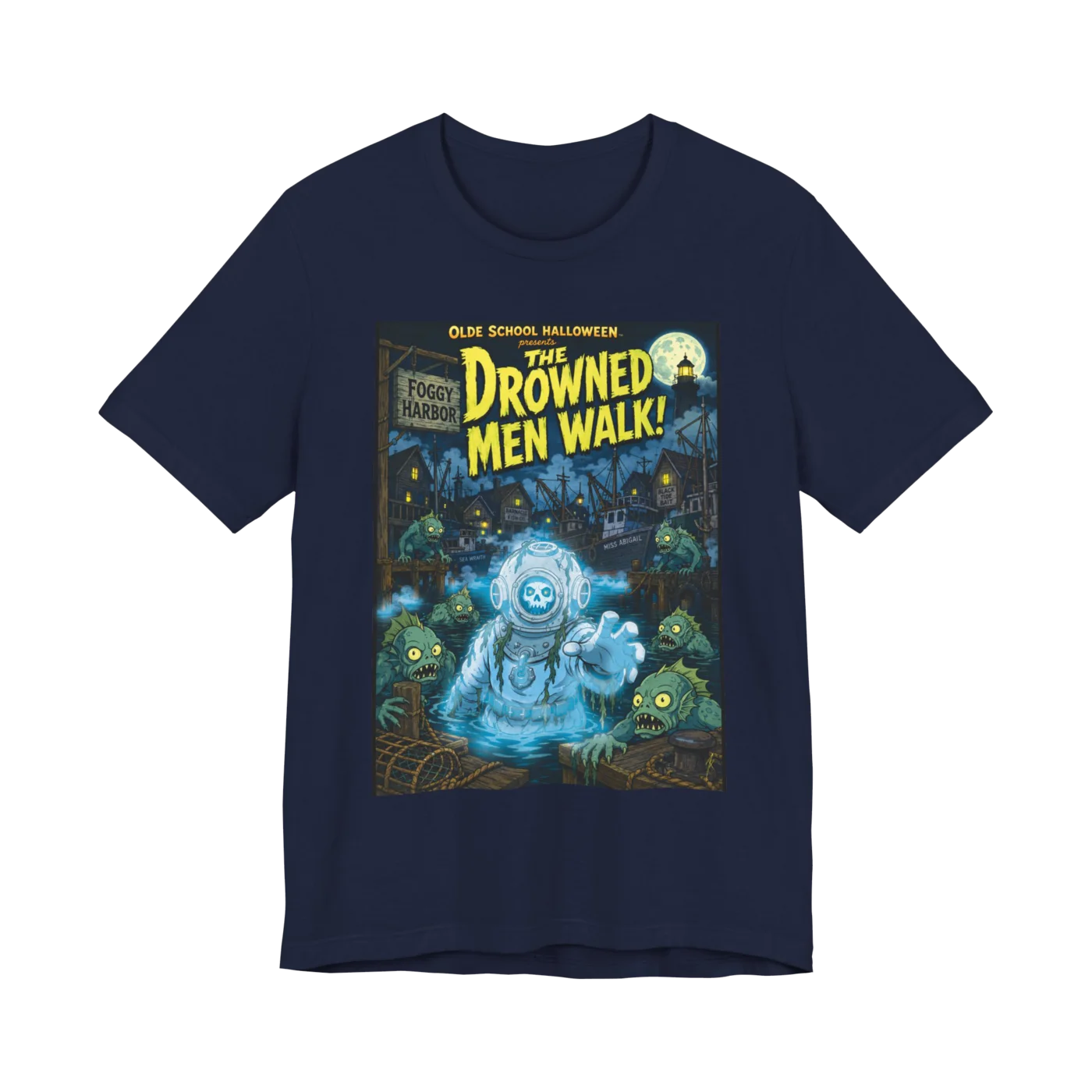 The Drowned Men Walk!
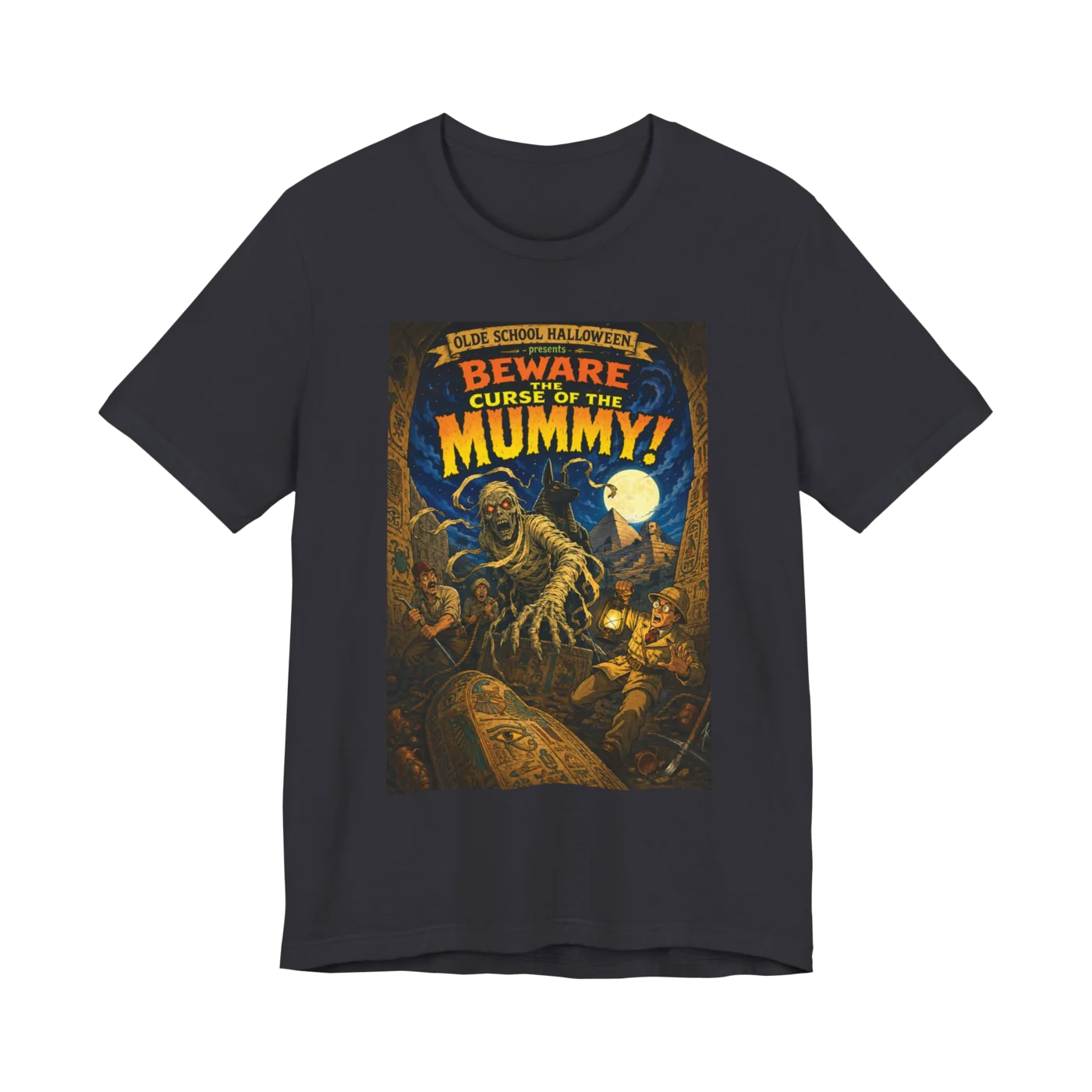 Beware The Curse Of The Mummy!
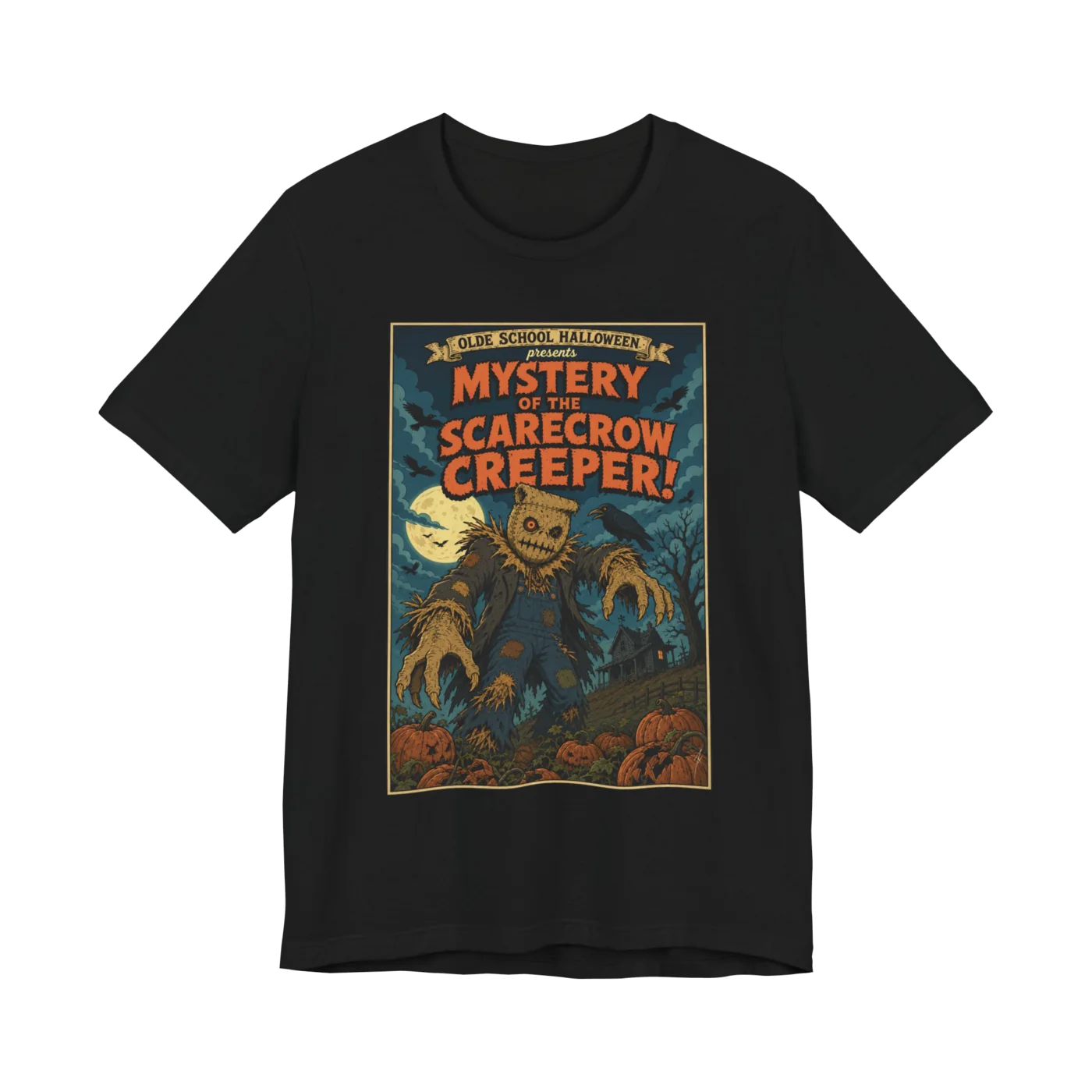 Mystery Of The Scarecrow Creeper!
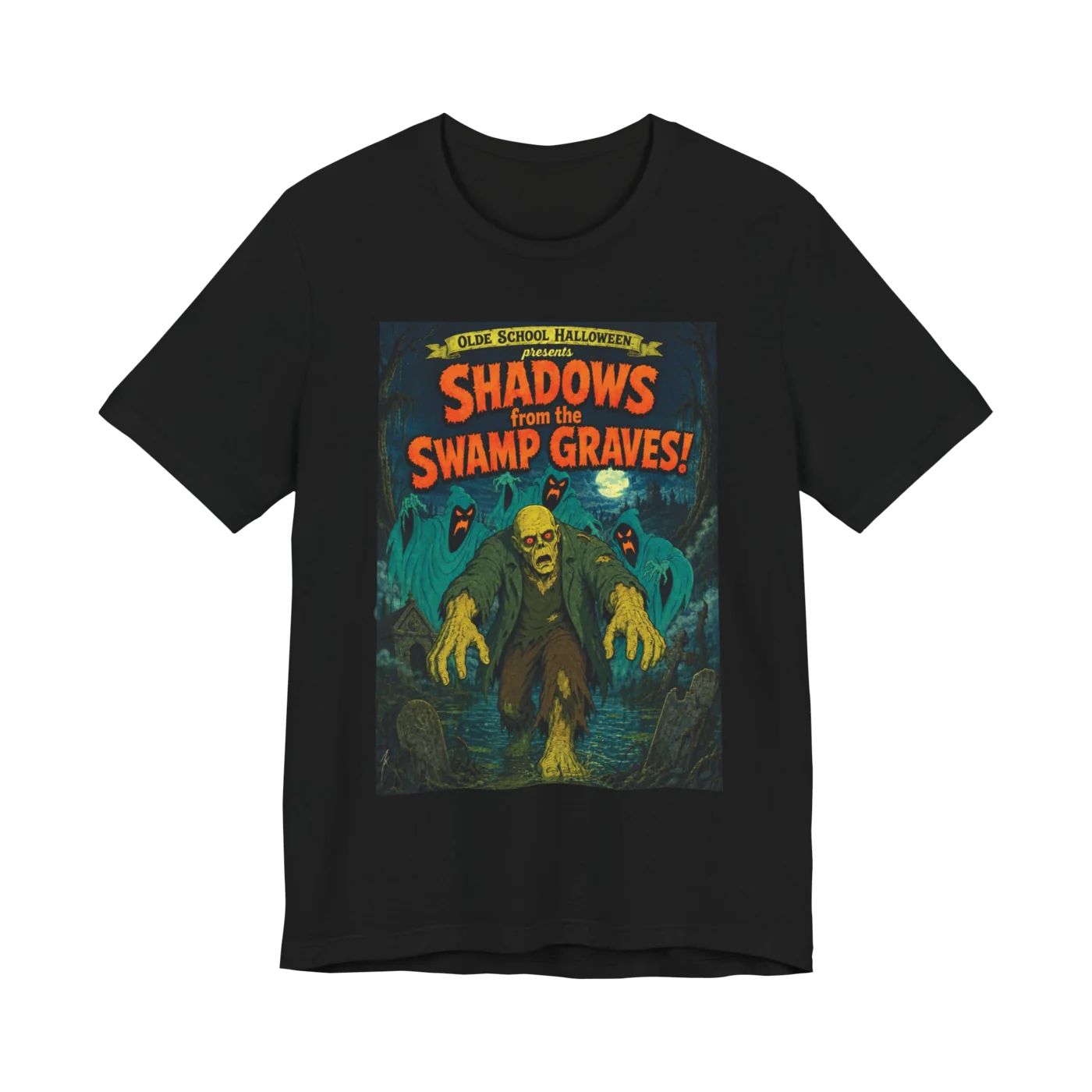 Shadows From The Swamp Graves!
The Porchlight
New shirts. Olde stories. First word on every sale.
Twice a month, thereabouts. Unsubscribe whenever.